Facade Budgeting for High-Rise Developments: The Definitive Guide
In the high-stakes world of urban development, the facade is arguably the most complex variable in the financial equation. It is simultaneously a building’s primary aesthetic statement, its thermal regulator, and its most significant structural “secondary” system. For a high-rise, the exterior envelope can account for upward of 20% to 25% of the total construction cost, yet it is often the area where initial budgetary estimates prove most volatile. Facade Budgeting for High-Rise Developments. This volatility stems from a fundamental tension: the facade must be a high-performance machine capable of withstanding extreme wind pressures and thermal fluctuations, but it is also the most scrutinized element of a project’s architectural identity.
Effective financial management of a skyscraper’s skin requires a shift from “cost estimation” to “strategic procurement.” On projects of significant scale, the distance between a conceptual rendering and a fabricated panel is littered with hidden costs—logistics, specialized testing, field tolerances, and global supply chain fluctuations. A developer who treats the facade as a commodity to be bid out at the lowest price often finds that the “savings” are rapidly evaporated by field errors, delays in enclosure, and the long-term operational drain of a lower-performing system.
Furthermore, as global energy codes tighten and carbon-neutral mandates become the legislative standard, the fiscal planning of the envelope has entered a new era of complexity. We are no longer merely budgeting for glass and aluminum; we are budgeting for performance outcomes. The financial viability of a 50-story tower now depends on the envelope’s ability to reduce mechanical plant loads and meet stringent air-leakage requirements. To navigate this landscape, stakeholders must adopt a multi-disciplinary approach that integrates building science, supply chain logistics, and long-term asset management into a singular, cohesive financial strategy.
Facade budgeting for high-rise developments
To accurately define Facade budgeting for high-rise developments, one must view it as the management of a high-risk manufacturing process rather than a traditional construction trade. A common misunderstanding in the industry is that a facade budget is a linear calculation based on square footage. While “cost per square foot” is a useful benchmark, it fails to capture the “geometric tax” imposed by complex shapes, the “logistic tax” of site access in dense urban cores, and the “performance tax” required to meet modern energy targets.
Oversimplification in this field often leads to the “Hard-Cost Fallacy.” Developers frequently focus on the price of the glass and the aluminum extrusions, ignoring the “soft costs” that can bloat a budget by 15% or more. These include the cost of full-scale laboratory mock-up testing, third-party quality assurance at the factory, and the specialized engineering required for custom anchors. A professional budget accounts for these “invisible” requirements early in the schematic phase, ensuring that the project doesn’t face a “value-engineering” crisis later that strips the building of its quality and performance.
The risk of a shallow budgeting approach is particularly acute in the transition from “Stick-Built” to “Unitized” systems. While unitized systems have a higher upfront material cost, they offer a faster path to building enclosure, which significantly reduces the “carry cost” of a construction loan. A sophisticated budget identifies this “Time-Value of Money” and realizes that spending more on the facade system can actually lower the total project cost by accelerating the path to occupancy. Understanding these secondary and tertiary financial effects is the hallmark of advanced development management.
Historical Context: From Static Walls to Performance Assemblies
The evolution of high-rise economics is mirrored in the evolution of the wall. In the early 20th century, facades were largely masonry-based, and budgeting was a matter of calculating brick counts and stone-cutting labor. The primary economic driver was local material availability. With the post-war rise of the international style, the “Curtain Wall” revolutionized the economics of the skyscraper. For the first time, the facade was decoupled from the structure, allowing for lighter, faster, and cheaper construction.
However, the 1970s and 1980s introduced a new variable: energy efficiency. The single-pane glass boxes of the previous decade became operational liabilities. Budgeting shifted to include the cost of Insulated Glass Units (IGUs) and early thermal breaks. As towers grew taller, the wind-load requirements became more extreme, forcing the industry toward the “Unitized” model—pre-fabricated panels that could be installed without scaffolding. This shift moved the budget from the “construction site” to the “factory floor,” turning facade procurement into a global manufacturing logistics exercise.
Today, we are in the era of “Decarbonization Finance.” The budget for a high-rise facade is now influenced by “Embodied Carbon” taxes and green building certifications (LEED, BREEAM). The financial model has expanded to include the “Social Cost of Carbon,” where the envelope’s performance is tied directly to the building’s ability to secure favorable interest rates and attract high-value corporate tenants.
Conceptual Frameworks and Financial Mental Models
Experts in development utilize specific mental models to categorize expenditures and identify value-creation opportunities.
1. The Enclosure-to-Core Ratio
This model evaluates the efficiency of the building’s floor plate. A tower with a complex, “zigzag” facade has a much higher ratio of facade area to leasable floor area. In a budget-constrained environment, this framework helps architects and developers understand the “cost-per-usable-square-foot” of an architectural gesture, allowing for more informed decisions on building shape.
2. The “Front-Loading” Investment Framework
This framework posits that $1 spent on specialized facade engineering and factory audits during the design phase saves $100 in field corrections and $1,000 in post-occupancy litigation. In Facade budgeting for high-rise developments, the most successful projects are those that over-invest in pre-construction to eliminate the “unknowns” that cause budget blowouts during installation.
3. The Lifecycle Operational Offset
This model treats the facade as an “energy-saving machine.” It calculates the capital expenditure (CapEx) of high-performance glazing against the operational expenditure (OpEx) of the HVAC system. If a $2 million upgrade in glass reduces the required size of the chiller plant by $1 million and saves $100,000 in annual electricity, the “real” cost of the upgrade is significantly lower than it appears on the balance sheet.
Key Categories of Systems and Economic Trade-offs
A budget must account for the specific “DNA” of the chosen system, as each carries distinct logistical and financial profiles.
| System Type | Capital Intensity | Installation Speed | Maintenance Cost | Best Use Case |
| Unitized Curtain Wall | High | Very Fast | Low | High-end office/residential towers. |
| Window Wall | Moderate | Fast | Moderate | Mid-to-high-rise residential; budget sensitive. |
| Stick-Built System | Low to Moderate | Slow | High | Low-rise podiums; custom ground floors. |
| Precast Concrete | Moderate | Moderate | Very Low | Institutional; heavy acoustic needs. |
| Structural Glass (Point-Fix) | Very High | Slow | High | Lobbies; flagship “hero” features. |
Decision Logic: Procurement Timing
In the current global market, the timing of the “Buy-out” is as important as the price. Buying facade materials (aluminum/glass) too late exposes the budget to commodity price spikes. Buying too early can lead to massive storage and double-handling fees. The ideal logic is a “just-in-time” procurement strategy backed by a locked-in commodity price contract.
Detailed Real-World Scenarios Facade Budgeting for High-Rise Developments
Scenario 1: The “Complex Geometry” Tax
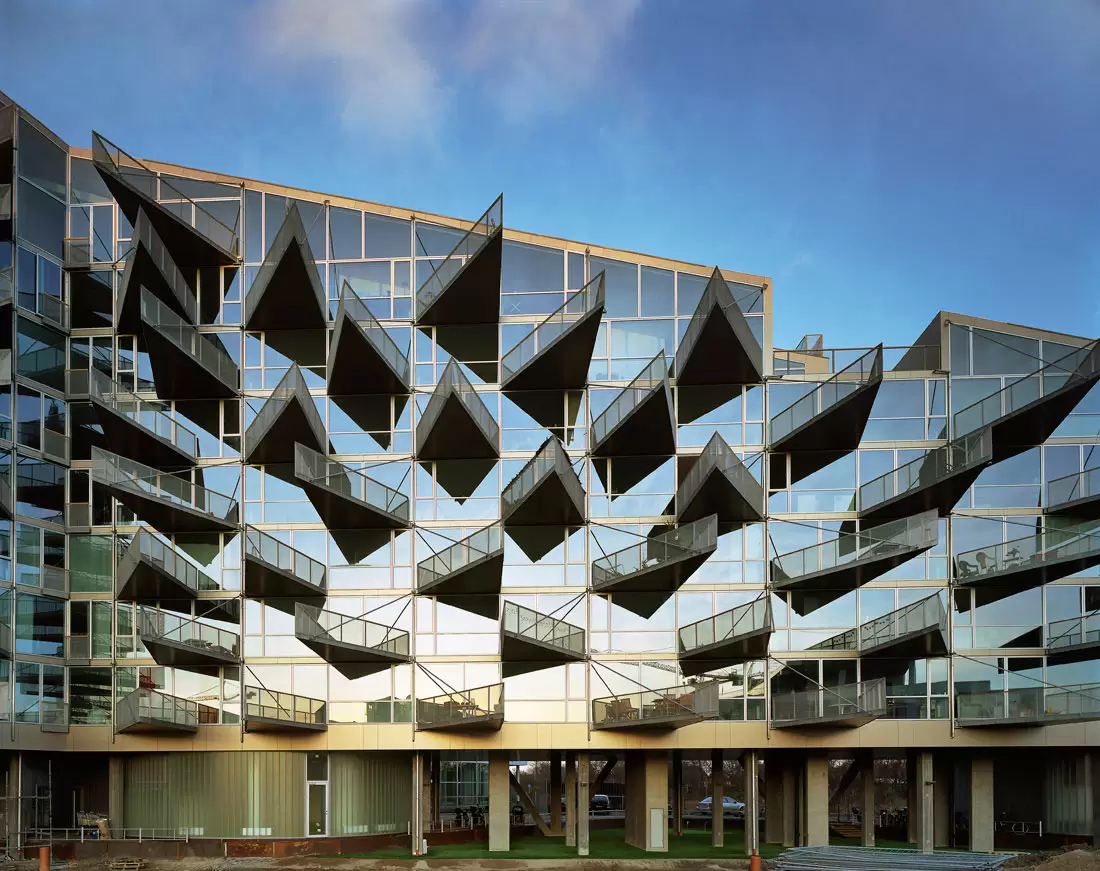
A luxury residential tower features a “tapering” design where every floor has a slightly different circumference.
-
The Constraint: Standardized unitized panels cannot be used; thousands of unique panel sizes are required.
-
The Budget Impact: Drafting and fabrication costs increase by 30% due to the loss of “economies of scale.”
-
Decision Point: Does the “iconic” nature of the tapering design increase the sales price per square foot enough to offset the $5 million increase in the facade budget?
Scenario 2: The “High-Wind” Zone
A 60-story tower is built in a hurricane-prone coastal region.
-
The Constraint: Glass thickness must increase significantly to meet missile-impact and pressure requirements.
-
The Budget Impact: Heavier glass requires beefier aluminum frames and more expensive anchors.
-
Second-Order Effect: The increased weight of the facade may require the structural engineer to reinforce the perimeter concrete beams, a “hidden” cost often missed in the initial facade-only budget.
Planning, Cost, and Resource Dynamics
The allocation of resources in a high-rise envelope project must be viewed through the lens of “Risk and Reward.”
Estimated Budget Breakdown for a High-Rise Facade
| Category | % of Facade Budget | Variable Drivers |
| Design & Engineering | 3% – 5% | Complexity of the system; code requirements. |
| Materials (Glass/Metal) | 35% – 45% | Global commodity prices; coating specifications. |
| Fabrication & Assembly | 20% – 25% | Labor rates at the factory; quality control. |
| Logistics & Hoisting | 10% – 15% | Shipping distances; crane availability; site access. |
| Field Installation | 15% – 20% | Local union labor; site tolerances; weather. |
Opportunity costs are critical here: every day the facade is delayed, the interior trades (drywall, MEP, finishes) are stalled, burning “interest” on the construction loan with zero progress.
Technical Tools, Strategies, and Support Systems
Advanced budgeting requires a suite of technical tools to ensure the financial model is grounded in physical reality.
-
BIM-Linked Cost Modeling: Using Building Information Modeling to extract exact material quantities. If the design changes, the budget updates automatically.
-
Wind Tunnel Testing: Real-world testing of a building model to see if the “code-required” wind pressures are too high or too low. Optimizing the glass thickness based on wind tunnel data can save hundreds of thousands of dollars.
-
Laboratory Mock-ups (PMU): Building a full-size section of the facade and blasting it with airplane engines and water. This “insurance policy” ensures the system works before 5,000 panels are made.
-
Global Supply Chain Mapping: Tracking where the aluminum is smelted, where the glass is coated, and where the assembly happens to identify geopolitical risks.
-
Thermal Simulation (THERM/WINDOW): Proving the envelope meets energy codes before the glass is purchased.
-
Third-Party Factory Audits: Independent inspectors at the manufacturing plant to ensure the quality matches the “Master Sample,” preventing expensive “rejects” at the construction site.
Risk Landscape and Taxonomy of Fiscal Failure
A facade budget rarely fails due to a single event; it is usually a “death by a thousand cuts.”
-
The Tolerance Mismatch: The concrete structure is built with a 1-inch variance, but the facade is manufactured with a 1/8-inch tolerance. If they don’t meet, custom “fix-it” brackets must be engineered for every panel.
-
The “Value Engineering” Backfire: Replacing a high-quality sealant with a cheaper one to save $50,000, only to have the building leak and require a $5 million remediation three years later.
-
Logistic Bottlenecks: The crane is shared by five trades. If the facade panels don’t get “hook time,” the whole project stalls.
-
Commodity Volatility: Aluminum prices can swing 20% in a month. Without a “hedge” or a locked-in price, the budget is at the mercy of the market.
Governance, Maintenance, and Long-Term Adaptation
A sophisticated budget includes a “Post-Enclosure” plan. The fiscal responsibility doesn’t end when the last panel is hung.
The Lifecycle Governance Checklist
-
Reserve Fund Planning: Budgeting for the replacement of gaskets and sealants every 15-20 years.
-
BMU (Building Maintenance Unit) Budget: The crane on the roof that washes the windows and replaces broken glass is a multi-million dollar investment that must be included in the “Facade” budget.
-
Performance Monitoring: Using sensors to track the building’s actual energy usage against the “budgeted” model.
Measurement, Tracking, and Evaluation Metrics
How do we quantify the success of Facade budgeting for high-rise developments?
-
Leading Indicators: “RFI” (Request for Information) counts; the speed of “Shop Drawing” approvals; the results of the “Air Infiltration” field test.
-
Lagging Indicators: Total “Change Order” percentage relative to the original contract; actual enclosure date versus the baseline schedule; energy use intensity (EUI) of the finished building.
-
Documentation Examples:
-
The “Buy-out” Log: Tracking when materials were purchased versus when they were needed.
-
The Mock-up Certification: The legal document proving the system passed the water and wind tests.
-
Common Misconceptions and Oversimplifications
-
“Stick-built is always cheaper.” On a 40-story tower, the labor and scaffolding costs of stick-built systems almost always exceed the material costs of unitized systems.
-
“The architect manages the budget.” The architect manages the design. The budget is a collaborative effort between the developer, the facade consultant, and the general contractor.
-
“Double-glazing is ‘standard’ for skyscrapers.” In most modern markets, “Triple-glazing” or “Vacuum Insulated Glazing” is becoming the new standard for meeting energy budgets.
-
“Glass is the most expensive part.” Often, the specialized aluminum extrusions and the structural anchors represent a higher percentage of the “installed cost” than the glass itself.
-
“BIM is just for looking at.” BIM is a procurement tool. If it’s not being used to count bolts and square footage, it’s being underutilized.
Conclusion
The pursuit of excellence in Facade budgeting for high-rise developments is an exercise in intellectual honesty. It requires stakeholders to look past the seductive simplicity of a “per square foot” price and grapple with the messy reality of building science, global logistics, and long-term thermodynamics. A skyscraper is a 50-year investment, and the facade is the guardian of that investment’s value. By prioritizing forensic-level planning, rigorous testing, and lifecycle accounting, developers can move from a posture of “cost-containment” to one of “value-optimization.” In the end, the most expensive facade is not the one with the highest initial price, but the one that fails to perform in the wind, the sun, and the market.