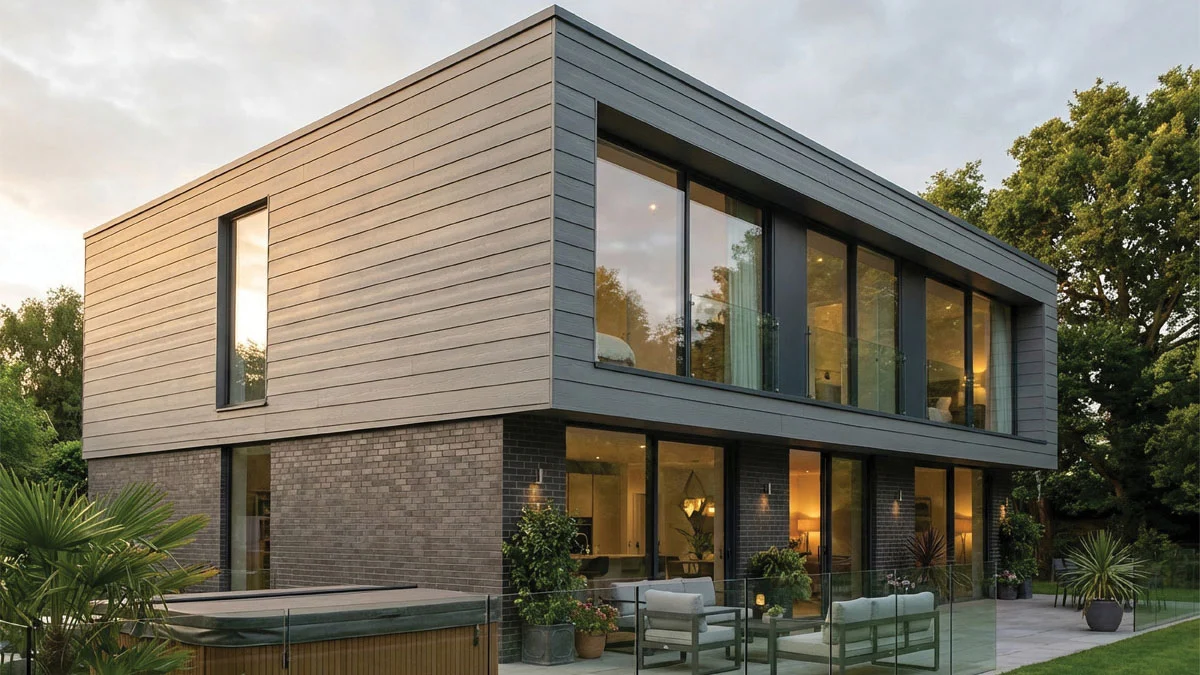
Common Exterior Cladding Mistakes: The Definitive Pillar Guide
The exterior cladding of a building is frequently reduced to its aesthetic contribution—the color, texture, and rhythm that define a structure’s public identity. However, in the rigorous world of building science, cladding is a high-performance mechanical system that must manage the violent transition between a controlled interior and an unforgiving exterior. Common Exterior Cladding Mistakes. It is the first line of defense against the thermodynamic pressures of wind, water, and solar radiation. When this system is designed or installed with a lack of technical foresight, the building ceases to be a durable asset and becomes a liability defined by systemic decay.
Modern cladding failures are rarely the result of a single catastrophic event. Instead, they are the culmination of microscopic oversights: a misplaced flashing, an incompatible sealant, or a misunderstanding of air pressure differentials. The complexity of today’s multi-layered assemblies—incorporating continuous insulation, vapor barriers, and drainage cavities—has increased the statistical “surface area” for error. As we move toward tighter building envelopes and more adventurous architectural geometries, the margin for error has narrowed significantly, necessitating a move toward forensic-level precision in both design and execution.
Investigating the breakdown of these systems requires an analytical perspective that looks past the surface. One must understand the “physics of the cavity”—the invisible zone behind the cladding where moisture is managed and air pressure is equalized. It is within this hidden architecture that the most significant failures occur, often remaining undetected for years while rotting the building’s structural substrate from the inside out. A truly definitive reference on the subject must therefore prioritize the mechanics of the assembly over the appearance of the finish.
Common Exterior Cladding Mistakes
To define common exterior cladding mistakes is to recognize a disconnect between architectural intent and the immutable laws of physics. The most pervasive error in the industry is treating cladding as a “waterproof barrier” rather than a “water-management system.” A common misunderstanding among developers is the belief that if the exterior joints are sealed tightly enough, the building will remain dry. In reality, no seal is permanent. Physics dictates that water will eventually bypass the primary cladding layer; the mistake lies in failing to provide a clear, unobstructed path for that water to exit.
Oversimplification in this field often centers on “face-sealed” logic. When a system relies entirely on a bead of caulk to keep a building dry, it is a high-risk assembly. If that caulk fails by even a fraction of a millimeter—due to UV degradation or thermal expansion—wind pressure will drive water into the wall cavity. Professional risk mitigation avoids this by adopting “rainscreen” principles, where the cladding is decoupled from the water-resistive barrier (WRB), allowing for drainage and ventilation. Failing to understand the difference between these two philosophies is the root of the majority of modern envelope litigation.
Another critical oversight involves material compatibility and the “chemical cocktail” of the envelope. Modern walls use a staggering variety of polymers, metals, and adhesives. A mistake often occurs when a specific flashing tape is incompatible with the sealant used on a window flange, leading to a chemical “reversion” where the materials turn into a useless liquid. Avoiding these risks requires more than just following a manufacturer’s brochure; it requires a forensic understanding of how different chemical families interact over a twenty-year lifecycle.
Contextual Background: The Evolution of the Barrier Wall
The history of cladding is a trajectory from “mass” to “membrane.” Historically, buildings relied on thick masonry walls. These were “storage” systems; they absorbed water during a storm and released it through evaporation when the sun came out. The “mistake” in these systems was rare because the physics was simple and the materials were robust. However, as steel and concrete frames allowed for thinner, lighter walls, we transitioned to “barrier” logic.
In the mid-twentieth century, the push for efficiency led to the development of EIFS (Exterior Insulation and Finish Systems) and early curtain walls. These systems were designed to be “perfect barriers.” However, the 1980s and 90s revealed the systemic flaw in this approach: if a perfect barrier has an imperfect detail, it traps moisture inside. This era birthed the “Leaky Condo” crisis, where thousands of buildings suffered from rot because the cladding didn’t allow for drying.
Today, we are in the era of the “Pressure-Equalized Rainscreen.” The evolution has moved toward systems that acknowledge the presence of water and manage it through sophisticated air-cavity physics. Yet, despite this technical progress, mistakes persist because the industry often prioritizes speed and cost-cutting over the rigorous detailing required for these complex assemblies to function.
Conceptual Frameworks and Mental Models
To analyze a cladding assembly, building scientists utilize specific mental models that help identify vulnerabilities before they manifest as leaks.
1. The “Four Barriers” Continuity Model
Every exterior wall must account for four distinct control layers: Water, Air, Vapor, and Thermal. The most frequent mistake is a “discontinuity” in one of these layers. If the air barrier is not taped to the window frame, the thermal barrier (insulation) loses up to 50% of its effectiveness, and moisture-laden air will condense inside the wall.
2. The “Pressure Equalization” Framework
Wind hitting a building creates a high-pressure zone. If the cavity behind the cladding is at a lower pressure, water is literally sucked into the building. This framework teaches that we must “vent” the cavity to ensure the pressure is equalized, removing the force that drives water ingress.
3. The “Hygric Buffer” Model
This model evaluates a material’s ability to safely store and release moisture. A mistake often made is replacing a high-buffer material (like brick) with a zero-buffer material (like metal panels) without increasing the drainage capacity. The “forgiveness” of the wall is reduced to zero.
Key Categories of Cladding Systems and Critical Trade-offs
Choosing a cladding system involves navigating a series of structural and thermodynamic trade-offs.
| System Type | Logic of Protection | Primary Risk | Ideal Application |
| Mass Masonry | Absorption & Evaporation. | Freeze-thaw spalling; weight. | Historic restoration; luxury. |
| Barrier EIFS | Face-sealed synthetic stucco. | Trapped moisture; impact damage. | Low-budget commercial. |
| Drained Rainscreen | Gravity drainage behind panels. | Clogged weep holes; installation complexity. | High-performance institutional. |
| Pressure-Equalized | Air-chamber pressure management. | High engineering cost; air-leakage. | High-rise in high-wind zones. |
| Unitized Curtain Wall | Factory-sealed modular panels. | Joint seal failure; logistics. | Commercial skyscrapers. |
| Ventilated Wood | Back-vented natural timber. | Fire spread; rot if not vented. | High-end residential. |
Decision Logic: The Drainage Plane
The most critical decision in any cladding selection is the depth and accessibility of the drainage plane. A common error is a “nominal” air gap that is so thin (less than 1/4 inch) that water cannot actually drain due to surface tension (capillary action). A functional system requires a clear gap that allows for both liquid drainage and airflow for drying.
Detailed Real-World Scenarios
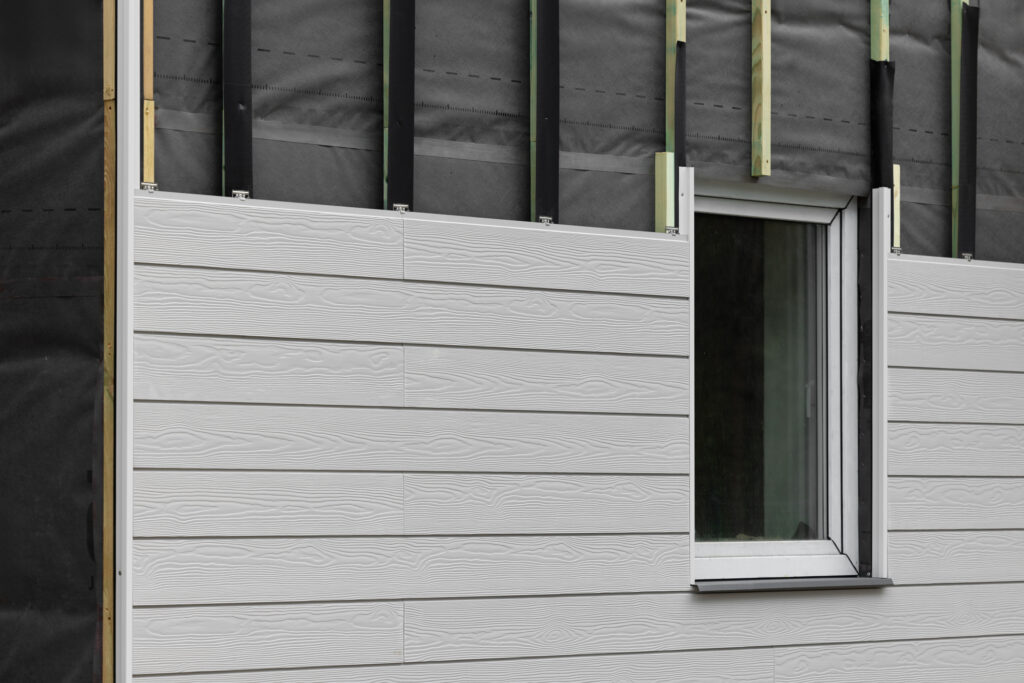
Scenario 1: The “Inverse” Vapor Drive
In a hot, humid climate, a building is designed with a vapor barrier on the inside of the wall (a common standard for cold climates).
-
The Mistake: During the summer, the air conditioning keeps the interior cool and dry. High-pressure humidity from the outside pushes inward, hits the cold vapor barrier, and turns to liquid water inside the wall.
-
The Failure: Massive mold growth behind the interior drywall within two years.
-
The Lesson: Vapor barriers must be placed on the “warm side” of the insulation, which changes based on geography.
Scenario 2: The “Reverse-Lapped” Flashing
A contractor installs window flashing from the top down.
-
The Mistake: The upper layer of paper is tucked behind the lower layer.
-
The Failure: Water running down the wall is directed behind the flashing rather than over it.
-
Second-Order Effect: This “shingle-lapping” error is often invisible once the cladding is installed, leading to structural rot that isn’t discovered until a window literally falls out.
Planning, Cost, and Resource Dynamics
The economics of cladding are governed by the “Rule of 100”: a $10 flashing error in the design phase costs $100 to fix during construction and $10,000 to remediate after the building is occupied.
Budget Variance and Opportunity Costs
| Phase | Activity | Cost Impact | Potential Saving |
| Design | Peer review of details. | $5,000 – $15,000 | Prevents $500k in future repairs. |
| Construction | Third-party field testing. | $10,000 – $20,000 | Identifies leaks while they are fixable. |
| Maintenance | Cleaning and sealant audits. | $2,000 – $5,000/yr | Extends system life by 20 years. |
| Failure | Forensic investigation & Re-cladding. | 150% of original cost. | None. |
Tools, Strategies, and Support Systems
Modern cladding integrity is supported by a suite of diagnostic and preventative tools.
-
Hygrothermal Modeling (WUFI): Simulating how heat and moisture will move through a specific wall assembly over 10 years of weather data.
-
ASTM E1105 Water Penetration Testing: Using a calibrated spray bar and air-pressure chamber to “force” a leak in a newly installed window to verify performance.
-
Infrared Thermography: Identifying missing insulation or “wet” areas behind the cladding that are invisible to the naked eye.
-
Borescope Inspection: Inserting cameras into the drainage cavity to ensure that mortar droppings or debris are not clogging the weep holes.
-
Electronic Leak Detection (ELD): Using an electric field to find pinhole breaches in the water-resistive barrier.
-
Blower Door Testing: Measuring the overall “air tightness” of the envelope to ensure the air barrier is continuous.
Risk Landscape and Taxonomy of Failure
The failure of a cladding system is rarely an isolated event; it is a “compounding” risk.
-
The Adhesion Failure: A sealant fails to bond to a high-performance coating on a metal panel.
-
The Thermal Bridge: Metal brackets that hold the cladding act as “radiators,” sucking heat out of the building and causing “ghosting” (dark dust patterns) on interior walls.
-
The Galvanic Corrosion: Aluminum cladding is attached with stainless steel screws without a protective washer, leading to the metal “eating” itself in a salty coastal environment.
-
The Fire Spread Risk: Improperly specified “combustible” cores in metal panels (the primary cause of the Grenfell Tower tragedy) can turn a facade into a vertical chimney for fire.
Governance, Maintenance, and Long-Term Adaptation
A building envelope is a dynamic asset that requires a “governance” plan. The mistake is treating cladding as a “set-and-forget” component.
-
The Maintenance Manual: Every building should have a specific guide detailing the type of sealants used and their expected replacement cycle (typically 7-12 years).
-
Weep Hole Monitoring: A quarterly check to ensure that landscaping, mulch, or insect nests have not blocked the drainage points at the base of the wall.
-
Adjustment Triggers: If a building’s energy usage spikes by 15% in a single year, it should trigger an infrared audit of the cladding to check for “wet” insulation.
Measurement, Tracking, and Evaluation
How do we measure the “success” of a cladding system? It requires a blend of quantitative and qualitative signals.
-
Leading Indicators: Results of the initial “mock-up” water test; number of design “clashes” resolved in the BIM model before construction.
-
Lagging Indicators: Total energy consumption per square foot; number of tenant complaints regarding “drafts” or “musty smells.”
-
Documentation Examples:
-
The Mock-Up Report: A record of how the window-to-wall transition was tested and passed.
-
The Sealant Log: Documentation of the batch numbers and “pull-test” results for all exterior caulking.
-
The Maintenance Log: A history of when the facade was last cleaned and inspected from a swing stage.
-
Common Misconceptions and Oversimplifications
-
“Caulk is a permanent fix.” It is a sacrificial material with a limited lifespan.
-
“Air barriers are just for energy savings.” They are the primary tool for moisture control; air carries 50 times more water into a wall than vapor diffusion.
-
“Stone is waterproof.” Stone is porous; it acts as a reservoir that can drive moisture into the wall through solar-driven vapor pressure.
-
“Thicker insulation is always better.” Thicker insulation can make the exterior cladding colder, reducing its ability to dry and increasing the risk of condensation.
-
“All WRBs (house wraps) are the same.” The “permeability” (breathability) of the wrap must be tuned to the specific climate and insulation strategy.
-
“Weep holes are for air.” They are for liquid water; if you see air coming out, you have an air-leakage problem, not a ventilation success.
Conclusion
The integrity of a building’s skin is a matter of technical honesty. The most common exterior cladding mistakes are born from a desire to simplify the complex and a tendency to prioritize the visual over the structural. As we build taller and more efficient structures, we must respect the fundamental building science that governs the movement of heat, air, and water. A successful cladding system is not one that is “perfect,” but one that is “forgiving”—designed to manage failure, allow for drying, and protect the structural core of the building for generations. The path to a durable envelope begins with the acknowledgment that water always wins; our job is simply to give it a safe way out.