Custom Facade Design Plans: A Technical Architectural Reference
The architectural facade is the primary interface between a building’s internal environment and the external world. While it is frequently reduced to a matter of aesthetic curation, the modern facade is a complex, high-performance assembly that must simultaneously manage thermal transfer, moisture migration, acoustic dampening, and structural loads. Custom Facade Design Plans. To engage with the creation of a bespoke building skin is to enter a negotiation between the visionary intent of the architect and the rigid laws of material physics.
In the current climate of rapid urbanization and intensifying environmental volatility, the standard “off-the-shelf” cladding solutions are increasingly proving insufficient. Designers are turning toward more integrated approaches where the building’s envelope is treated as a dynamic system. This shift necessitates a move away from seeing the facade as a static “wall” and toward viewing it as a multi-functional membrane—one that can breathe, shed water, and adapt to solar cycles without compromising the longevity of the structure beneath.
A comprehensive inquiry into these systems reveals that the most successful projects are not defined by the exoticism of their materials, but by the rigor of their detailing. The transition from a conceptual sketch to a functional reality requires a sophisticated understanding of how disparate materials interact over decades of exposure. This article serves as a definitive exploration of the technical and strategic layers involved in developing high-performance envelopes, ensuring that the final structure stands as an asset of long-term durability and architectural integrity.
Understanding “Custom Facade Design Plans”
At the professional level, the term custom facade design plans refers to more than just a set of architectural drawings; it denotes a comprehensive roadmap for the building’s enclosure system. These plans integrate structural engineering, building science, and aesthetic philosophy into a singular, executable document. The “custom” aspect implies that the solution is not merely selected from a catalog but is engineered to respond to the specific microclimate, orientation, and occupancy requirements of a unique site.
A recurring misunderstanding is the conflation of “custom” with “decorative.” Many stakeholders assume that a custom plan simply means choosing a unique color or texture. In reality, the customization often happens behind the visible surface—in the engineering of the air gap, the selection of the vapor-permeable membrane, and the design of the thermal break. If the underlying logic of the assembly is standard, the facade is not truly custom; it is merely a standard wall with a unique veneer.
Oversimplification in this sector carries significant risks. A plan that prioritizes the visual finish while ignoring the differential thermal expansion between the cladding and the substructure will inevitably lead to buckling or fastener failure. Therefore, engaging with custom facade design plans requires an analytical approach that treats the envelope as a series of interconnected control layers—water, air, vapor, and thermal—each requiring its own set of technical specifications.
Contextual Evolution: From Mass to Membrane
Historically, the building’s exterior was synonymous with its structure. Traditional masonry and heavy timber functioned as “mass walls,” where the thickness of the material provided both the structural support and the weather protection. These buildings managed moisture through absorption and slow evaporation. While enduring, this approach was thermally inefficient and limited the height and transparency of structures.
The Industrial Revolution and the subsequent rise of the Modern Movement decoupled the facade from the structural frame. The “curtain wall” emerged, allowing for vast expanses of glass and thin metal panels. However, early versions of these systems often suffered from massive heat loss and condensation issues. We have since moved into an era of “intelligent membranes,” where the facade is a high-tech assembly designed to facilitate specific environmental exchanges.
Today’s state-of-the-art involves the pressure-equalized rainscreen. This system acknowledges that water will eventually bypass the outer cladding. By creating a ventilated cavity behind the finish, the air pressure inside the wall matches the exterior wind pressure, neutralizing the force that would otherwise drive water into the building’s interior. This transition from “barrier” logic to “management” logic represents the pinnacle of modern enclosure design.
Conceptual Frameworks for Performance
To navigate the complexity of a bespoke envelope, architects and engineers utilize several mental models:
1. The Four Control Layers Framework
This framework dictates that every facade must explicitly account for four layers: the Water Control Layer (preventing liquid intrusion), the Air Control Layer (preventing uncontrolled air leakage), the Vapor Control Layer (managing humidity migration), and the Thermal Control Layer (insulation). In a high-quality plan, these layers are continuous and clearly defined at every transition and corner.
2. The Hydrothermal Stability Model
This model assesses how a material reacts to simultaneous changes in temperature and moisture. For example, a custom plan using wood-polymer composites must account for the fact that these materials expand significantly more when hot and humid than traditional timber, requiring specialized clip systems to allow for movement without noise or damage.
3. The Lifecycle Resilience Model
Instead of designing for “Day One” perfection, this framework designs for “Year Thirty” performance. It prioritizes materials and details that age predictably. This involves understanding the degradation curves of various finishes—from the patina of zinc to the UV-stabilization of high-pressure laminates.
Material Categories and Technical Trade-offs
Selecting materials for a custom envelope involves a rigorous evaluation of their physical properties against the project’s constraints.
| Material Category | Primary Benefit | Technical Limitation | Best Use Case |
| Sintered Stone/Ceramic | Zero porosity; UV stable | Rigid; high weight per panel | High-traffic commercial envelopes |
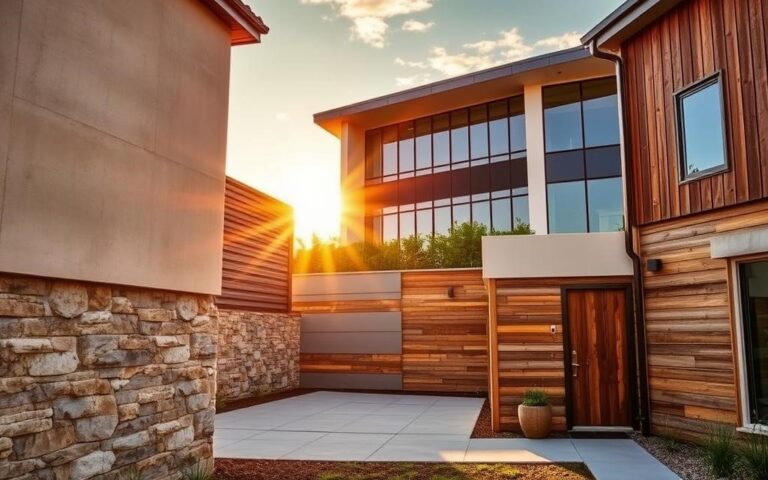
| Thermally Modified Wood | Dimensional stability | Brittle; requires UV oil | Modernist residential in moist climates |
| High-Pressure Laminate | Aesthetic versatility | High thermal expansion | Schools and public infrastructure |
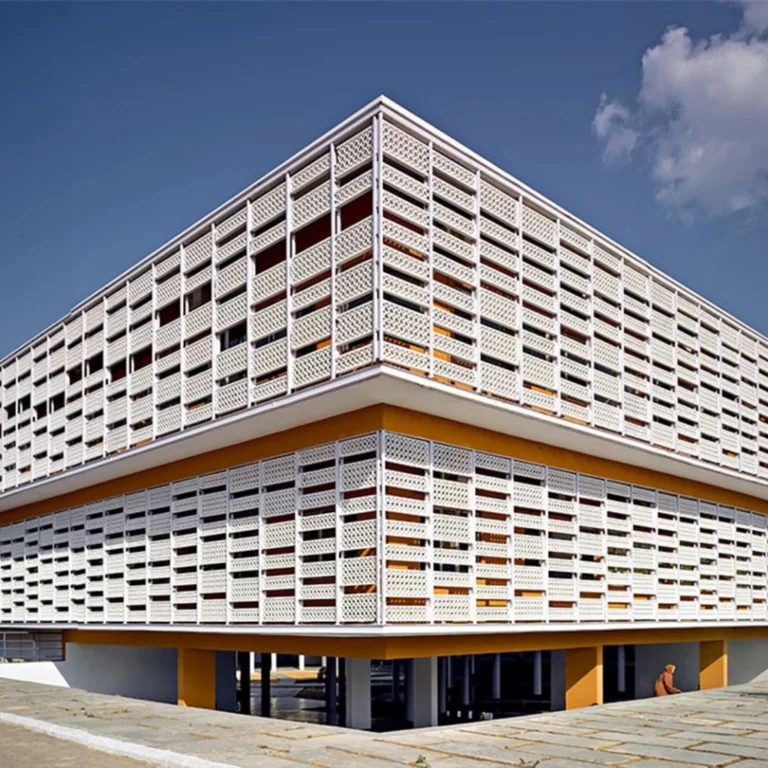
| Perforated Metal | Solar shading; ventilation | Potential for wind-noise | Parking structures; office shading |
| Fibre-Reinforced Concrete | High impact resistance | Heavy; requires structural prep | Coastal or high-wind zones |
Realistic Decision Logic
The decision to use one material over another is rarely purely aesthetic. For instance, in a coastal environment with high salinity, a plan might move away from aluminum (due to pitting) toward 316-grade stainless steel or a high-performance ceramic. Conversely, in a high-diurnal temperature swing region (like a desert), the plan must prioritize materials with low expansion coefficients or engineer oversized joints.
Detailed Real-World Scenarios and Constraints Custom Facade Design Plans
Scenario A: The High-Rise Coastal Envelope
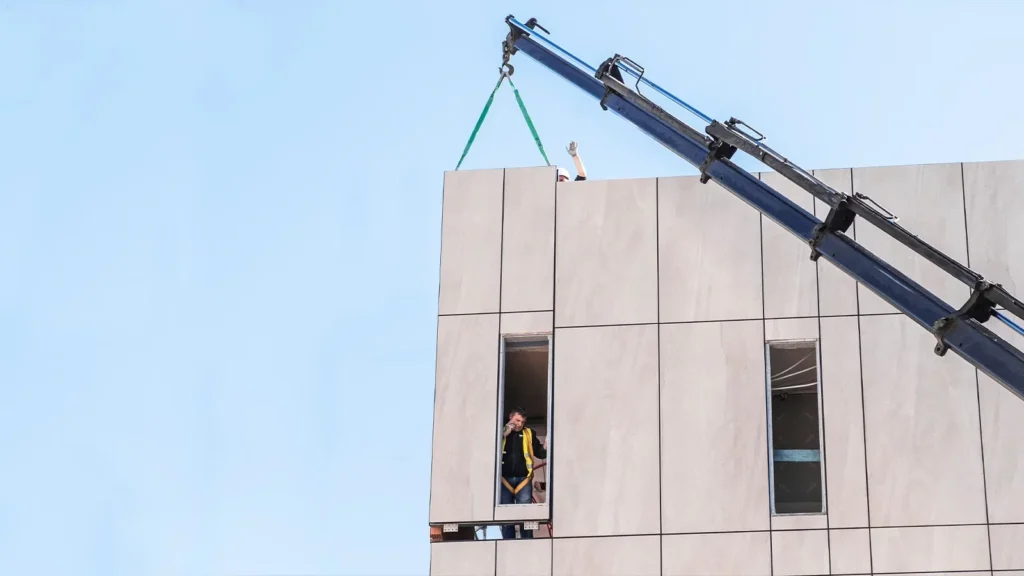
Wind loads at height are significantly higher than at ground level. A custom plan here must prioritize the mechanical attachment of panels. A “clip and rail” system is often necessary to ensure that suction forces (leeward wind) do not detach the facade.
-
Failure Mode: “Fluttering” of thin panels, leading to metal fatigue at the fastener points.
Scenario B: The Heritage Infill Project
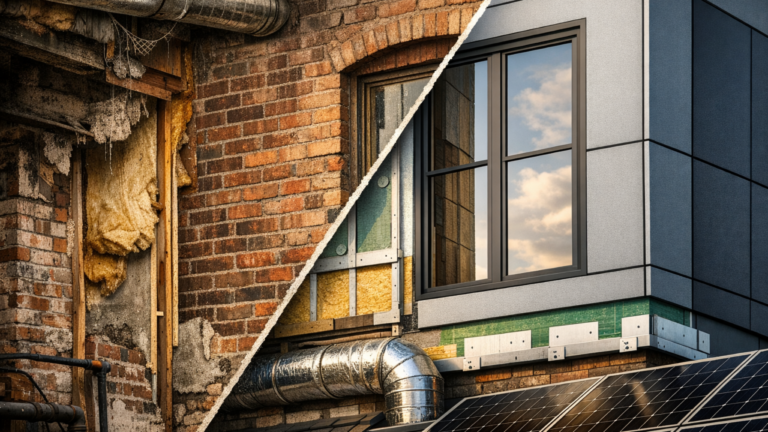
When adding a modern facade to a historic district, the plan must manage the moisture levels of the existing masonry. If a modern, non-breathable facade is applied over old brick, the moisture trapped in the brick will freeze and cause “spalling” (surface cracking).
-
Decision Point: Use a highly ventilated rainscreen that allows the original wall to breathe.
Scenario C: The Arid High-UV Site
In environments with 300+ days of sun, the primary threat is the breakdown of organic binders in materials like certain composites.
-
Second-Order Effect: Darker facades can reach surface temperatures of 180°F, potentially melting the foam insulation behind them if a thermal break is not properly designed.
Economic Dynamics and Resource Planning
The economics of a custom envelope are defined by the “Cost of Complexity.” While the raw material costs are predictable, the indirect costs associated with detailing, specialized labor, and long-term maintenance often dictate the project’s viability.
| Component | Standard Siding | Custom Facade | Impact on Budget |
| Pre-Construction | Low (Off-the-shelf) | High (Shop drawings) | Significant upfront investment |
| Labor Grade | Generalist | Specialized / Certified | Higher hourly, lower error rate |
| Maintenance | Frequent (Paint/Repair) | Infrequent (Inspect/Wash) | High-end saves in lifecycle TCO |
Opportunity Cost: Choosing a cheaper, non-ventilated system often results in a “sick building” scenario where the cost of remediating mold or rot five years post-construction far exceeds the initial savings of the facade.
Support Systems, Tools, and Strategies
-
BIM and Parametric Design: Software that allows architects to model how every panel interacts, ensuring that complex geometries are actually constructible.
-
Thermal Bridge Analysis: Calculating exactly where heat is escaping through the metal brackets that hold the facade.
-
Hygrothermal Simulation (WUFI): Simulating 10 years of weather to see if moisture will accumulate in the wall cavity.
-
On-Site Water Penetration Testing: Using a spray rack to simulate a hurricane-force rain event before the building is finished.
-
Back-Priming: The essential practice of sealing the rear of wood or porous materials to prevent moisture absorption from the air gap.
-
Expansion Gaskets: Using EPDM or silicone gaskets in joints instead of wet caulk for better longevity.
Risk Landscape and Failure Modes
The primary risk in bespoke envelope design is the “Interface Failure.” Most leaks and structural issues occur not in the field of the wall, but where the facade meets something else—a window, a roofline, or a foundation.
Taxonomy of Compounding Risks
-
Reverse Lapping: Where a lower flashing is tucked under a higher one, creating a funnel into the wall.
-
Galvanic Corrosion: Occurs when two dissimilar metals (e.g., zinc panels and steel screws) touch in the presence of moisture, causing one to dissolve.
-
Restricted Drainage: When debris or excessive insulation blocks the ventilation gap, causing the wall to stay permanently damp.
Governance, Maintenance, and Long-Term Adaptation
A high-performance facade requires a “governance” structure—a schedule of activities to ensure it continues to perform as engineered.
Layered Checklist for Maintenance
-
Quarterly: Visual check of the “weep holes” to ensure they aren’t blocked by insects or dirt.
-
Annually: Inspection of sealants around window transitions; fresh water rinse in coastal zones to remove chloride ions.
-
Decade-Cycle: Testing the adhesion of any liquid-applied coatings or the tension of mechanical fasteners in high-vibration areas.
Measurement, Tracking, and Evaluation
How do we prove the effectiveness of a facade? We use a mix of leading and lagging indicators.
-
Leading Indicators: Real-time moisture sensors embedded in the wall cavity that alert the owner to a leak before it reaches the interior.
-
Lagging Indicators: Energy bills that remain stable over 10 years; the absence of “efflorescence” (white salt stains) on masonry.
-
Documentation Examples: Keeping a “Facade Log” that includes the specific alloy of the fasteners and the batch numbers of the panels for future color-matching if a repair is needed.
Common Misconceptions and Oversimplifications
-
Myth: “A waterproof facade is the goal.”
-
Correction: A building must be “water-managed,” not “waterproof.” A perfectly sealed building traps interior moisture, leading to rot.
-
Myth: “Metal siding makes a building hot.”
-
Correction: With a proper air gap, a metal facade acts as a “heat shield,” allowing hot air to rise and escape through the top vents before it ever reaches the building’s insulation.
-
Myth: “Modified wood doesn’t need oil.”
-
Correction: It won’t rot without oil, but it will turn gray. Maintenance is still required for aesthetic consistency.
Ethical and Practical Considerations
In the modern era, the carbon footprint of the facade is a major ethical consideration. Aluminum and glass have high “embodied carbon,” while wood-based facades sequester carbon. Designers must balance the need for a 100-year lifespan (which reduces waste) against the environmental cost of manufacturing the materials. Additionally, the “right to repair” is critical; using proprietary panel clips that may not be available in 20 years creates a risk that a small patch of damage might eventually require a full building reclad.
Synthesis and Final Conclusions
The creation of custom facade design plans is a high-stakes endeavor that requires a synthesis of art and engineering. It is the rejection of the “commodity building” in favor of a structure that is uniquely adapted to its environment. As we face a future of more extreme weather patterns and higher energy costs, the building’s skin will become its most important asset.
Success in this field is found in the invisible details—the 1/4-inch gap, the stainless steel screw, and the vapor-permeable membrane. By treating the envelope as a dynamic, managed system, we create buildings that do not just stand as monuments to a specific moment in time, but as resilient structures capable of maturing alongside the landscapes they inhabit. The facade is the building’s first and last defense; designing it with intellectual honesty is the only way to ensure its permanence.