Modern Farmhouse Exterior Luxury Finishes: The Definitive Pillar
The modern farmhouse aesthetic has moved past its initial phase of trend-driven popularity, maturing into a sophisticated architectural language that balances agrarian heritage with contemporary structural rigor. In its most elevated form, the style is no longer defined by a simple checklist of black windows and white board-and-batten siding. Instead, it relies on a complex interplay of materiality, where the “luxury” is found in the authenticity of the components and the precision of their execution. Modern Farmhouse Exterior Luxury Finishes. This evolution reflects a broader shift in high-end residential design: a move away from superficial ornamentation toward a deep, tactile connection with the building’s envelope.
To achieve longevity in this style, a designer must navigate the tension between the “rustic” and the “refined.” A farmhouse, by its historical nature, is a functional object shaped by the constraints of the land and the requirements of labor. The “modern” iteration introduces the luxury of large-scale glass, hidden structural steel, and meticulously engineered rainscreen systems. When these elements collide, the resulting structure must feel inevitable rather than forced. A luxury finish in this context is not merely an expensive material; it is a material that performs its role with structural honesty, aging gracefully rather than deteriorating.
This maturity in the market has created a demand for forensic-level detail in exterior planning. Homeowners and developers are increasingly aware that the “farmhouse look” can easily slide into the “suburban tract” look if the proportions are slightly off or if the finishes lack depth. It is an architectural philosophy that demands an understanding of how light interacts with matte surfaces and how different wood species react to regional climate pressures.
Modern farmhouse exterior luxury finishes
Defining Modern farmhouse exterior luxury finishes requires looking beyond the monochromatic palette that has dominated social media for the last decade. In a professional architectural context, “luxury” refers to the specification of materials that possess inherent durability, high-fidelity texture, and a lack of synthetic mimicry. A common misunderstanding is that luxury is synonymous with “expensive brands.” In reality, a luxury finish might be a locally sourced reclaimed white oak that has been thermally modified for stability, or a hand-applied lime wash that allows the masonry to breathe.
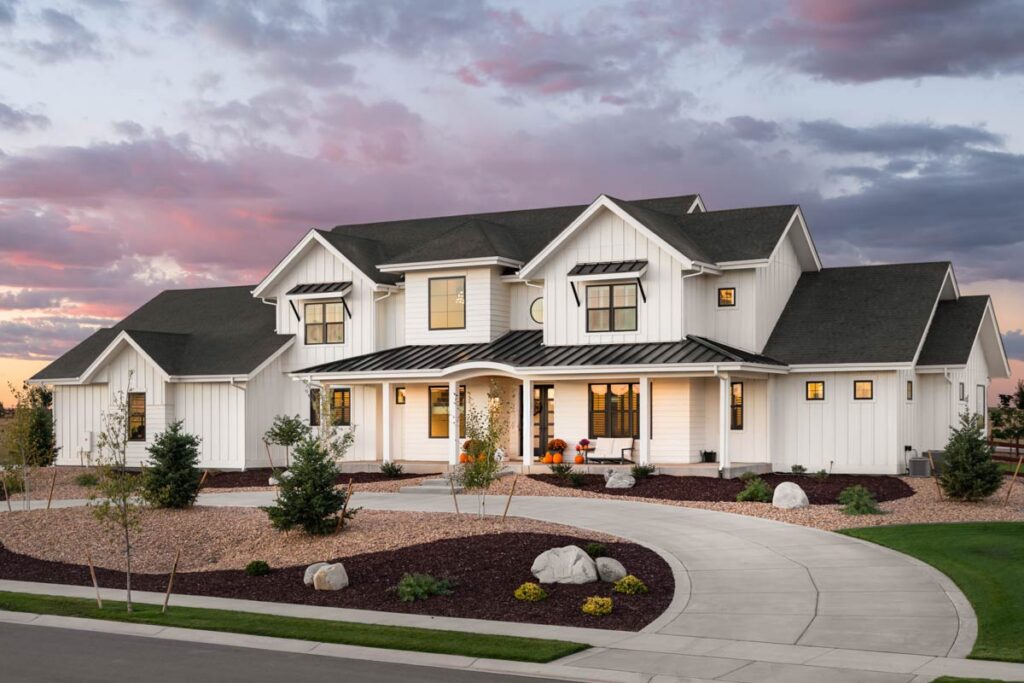
Oversimplification in this sector often centers on “The White Box” trope. When the exterior is treated as a flat, white canvas, the building loses its architectural soul. High-end farmhouse design utilizes “textural layering”—the strategic use of varying cladding widths, the juxtaposition of smooth metal with rough-hewn stone, and the introduction of “warmth” through natural wood soffits. Professional analysis focuses on the “reveal” and the “joint”; a luxury finish is defined by how two disparate materials meet. If the transition between the stone base and the siding is clunky or uses cheap vinyl flashing, the luxury of the materials is invalidated.
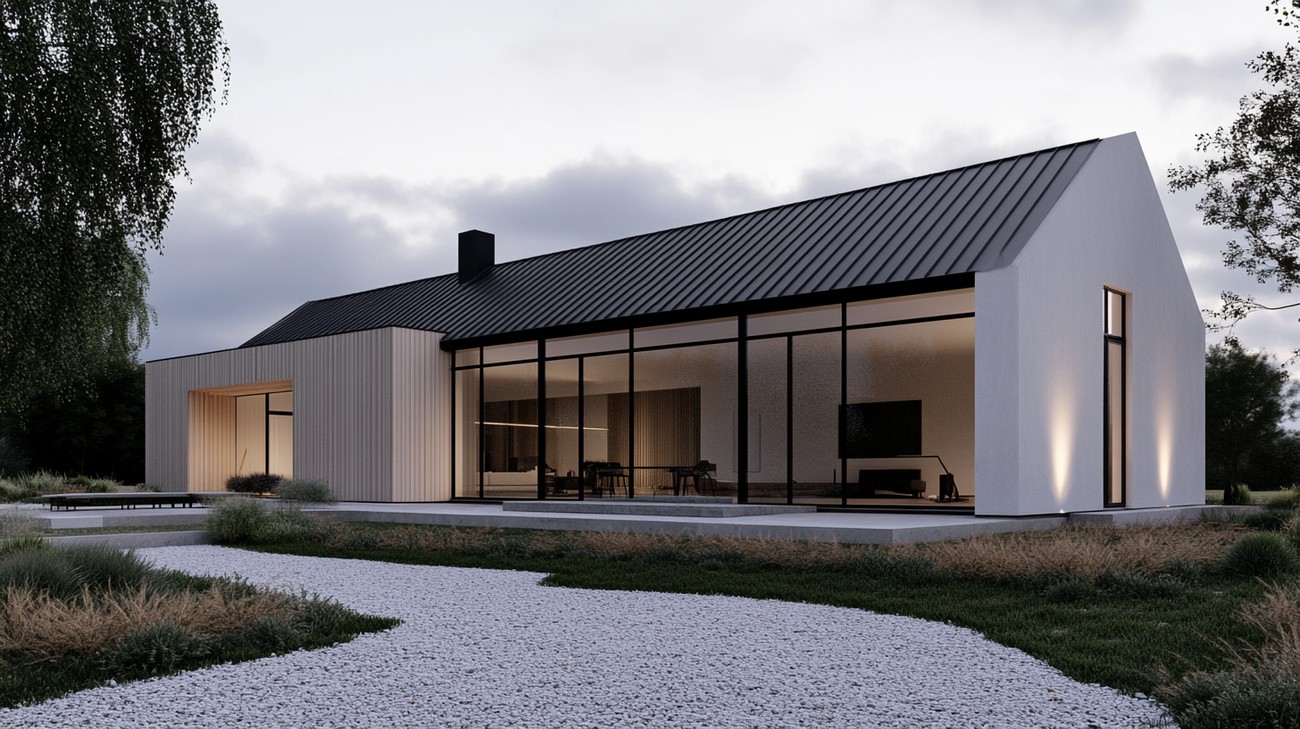
The risk of a surface-level approach is particularly acute in the selection of windows and doors. In the farmhouse vernacular, the “aperture” is the primary structural feature. Luxury finishes here involve ultra-thin steel profiles or aluminum-clad wood with true divided lites. These are not merely decorative; they are engineered systems designed to handle the wind loads of large open-plan living areas while maintaining the delicate, agrarian proportions of a traditional barn window. Understanding the engineering behind these “finishes” is what separates a high-performance estate from a themed residence.
Historical Context: From Survival to Sophistication
The original American farmhouse was a product of “Vagary and Necessity.” It was built with whatever materials were available on the site—usually timber and stone. The “finishes” were functional: white wash (lime) was used because it was an inexpensive disinfectant and reflected the sun; metal roofs were used for fire resistance and longevity.
The transition to the “Modern Farmhouse” began as a reaction to the overly ornate “McMansion” era of the late 20th century. People craved simplicity, verticality, and a connection to the outdoors. However, the first wave of this trend relied heavily on “faux” finishes—fiber cement made to look like wood, or plastic “shutters” that didn’t actually close.
The current era, which we might call “Authentic Modernism,” has stripped away the faux elements. We are seeing a return to the “Massing” of the original farmsteads but with 21st-century technology. The “luxury” now lies in the ability to have a 20-foot wall of glass that looks like a barn door but performs like a high-end thermal barrier. The evolution is a move from “theming” a house to “engineering” a legacy.
Conceptual Frameworks and Design Mental Models
Architects use specific mental models to ensure the exterior finishes work in harmony with the building’s scale.
1. The “Agrarian Hierarchy” Model
This framework dictates that the “main house” should have the most refined finishes (e.g., smooth siding, larger windows), while the “ancillary wings” or “garage/barn” should use more rugged, utilitarian finishes (e.g., vertical board-and-batten, standing seam metal). This creates a visual narrative that respects the history of the farmstead.
2. The “Honest Materiality” Model
This model forbids the use of materials that pretend to be something else. If a beam is visible, it should be a structural timber or a clearly expressed steel I-beam. If a finish looks like stone, it should be full-bed depth stone, not a thin “lick-and-stick” veneer. Luxury is derived from the weight and “truth” of the material.
3. The “Shadow and Light” Framework
Because modern farmhouses often use a limited color palette, the “finish” is actually the shadow. This model focuses on the depth of the batten, the thickness of the window trim, and the overhang of the eaves. By creating deep shadow lines, the building gains a three-dimensional quality that prevents it from looking like a flat, digital rendering.
Key Material Categories and Performance Trade-offs
Selecting the envelope for a luxury farmhouse involves navigating the tension between natural beauty and maintenance requirements.
| Material Category | Luxury Logic | Performance Trade-off | Maintenance Cycle |
| Thermally Modified Wood | Natural grain; no chemicals; high stability. | Graying over time if not oiled. | Low (if grayed) to Moderate. |
| Full-Bed Natural Stone | Incredible depth; thermal mass; permanent. | Extreme weight; high labor cost. | Very Low. |
| Steel-Profile Windows | Ultra-slim sightlines; high strength. | High cost; potential thermal bridging. | Moderate (sealant checks). |
| Standing Seam Metal | Clean lines; fireproof; modern edge. | “Oil canning” (rippling) in heat. | Low. |
| Hand-Applied Lime Wash | Breathable; “living” finish; historical. | Not for all climates; wears unevenly. | Moderate (re-application). |
| Zinc or Copper Accents | Self-healing patina; ultra-luxury. | Reactive to environment; high Capex. | Extremely Low. |
Decision Logic: The “Patina vs. Pristine” Choice
A critical decision for the owner is whether they want a building that looks “new” forever or one that “ages” into the landscape. Genuine luxury finishes, like cedar or copper, are designed to change color. If the client demands a “pristine” white finish forever, the strategy must shift toward high-performance fluoropolymer coatings on aluminum, which resist UV degradation for decades.
Detailed Real-World Scenarios Modern Farmhouse Exterior Luxury Finishes
Scenario 1: The High-Wind Coastal Farmhouse
A project on the coast of Maine or California requires the farmhouse aesthetic but faces 120mph wind loads.
-
The Finish Choice: Switching from traditional wood siding to high-density fiber cement or “Accoya” wood.
-
The Engineering: Utilizing a “Rainscreen” system where the luxury wood is separated from the water-resistive barrier by an air gap, allowing for rapid drying after a storm.
-
Failure Mode: Without the rainscreen, the white paint on the wood would peel within three years due to “back-side” moisture pressure.
Scenario 2: The High-Desert “Sun-Drenched” Estate
In Arizona or Utah, a white farmhouse faces extreme UV levels that would “cook” standard paints.
-
The Finish Choice: Moving away from painted wood to a light-colored, honed limestone or a “bone-white” integrally colored stucco.
-
The Logic: Integrated color means that as the sun wears the surface, the color remains consistent, and the “heat gain” is minimized by the material’s reflectivity.
Planning, Cost, and Resource Dynamics
The “budget” for a luxury farmhouse is often misunderstood. It is not just the cost of the siding; it is the cost of the “assembly.”
Estimated Investment Variance Table
| Component | “Standard” Choice | Luxury Finish Choice | Cost Multiplier |
| Windows | Vinyl/Standard Alum | Steel / Thin-Profile Clad | 3x – 5x |
| Siding | Pine / Fiber Cement | Thermally Modified / Cedar | 2x – 3x |
| Roofing | Asphalt Shingle | Heavy-Gauge Standing Seam | 2.5x |
| Stone | Concrete Veneer | Full-Bed Natural Quartzite | 4x |
| Hardware | Big Box Retail | Hand-Forged / Designer | 10x |
Technical Strategies and Support Systems
To maintain the “clean” look of a modern farmhouse, a great deal of technology must be hidden.
-
Concealed Gutters: For a truly modern “eave-less” look, the gutter system is built into the roof structure, requiring surgical-grade waterproofing.
-
Thermal Break Technology: In steel windows, a polyamide strip is used to prevent “sweating” and heat loss.
-
Hygrothermal Modeling: Simulating how moisture moves through the wall to ensure the “white” exterior doesn’t develop black mold from the inside out.
-
UV-Stable Sealants: Traditional caulk turns yellow and cracks. Luxury exteriors use “MS Polymers” that remain flexible and color-stable for 20+ years.
-
Smart Irrigation Integration: Ensuring that “over-spray” from sprinklers never hits the luxury wood or stone, preventing mineral staining.
-
Low-Iron Glass: Standard glass has a green tint. Luxury farmhouse windows use “low-iron” glass to ensure the view of the landscape is perfectly color-neutral.
Risk Landscape and Failure Modes
The “Modern Farmhouse” is particularly susceptible to certain failure modes if the finishes are improperly detailed.
-
“Oil Canning” of Metal Roofs: If the standing seam panels are too thin or installed too tightly, they will ripple in the sun, making a luxury home look like a cheap warehouse.
-
The “Dirty White” Syndrome: White houses show every spider web, bird dropping, and mud splash. A luxury plan must include “wash-down” accessibility.
-
Tannin Bleeding: If cedar or oak is used near white stucco without proper “bleeding” protection, the wood will leak brown “tea” onto the white surface, permanently staining it.
-
Structural Deflection in Large Glass: Oversized windows can “bow” or “rack” if the house settles by even 1/4 inch, leading to air leaks and shattered seals.
Governance, Maintenance, and Long-Term Adaptation
A luxury exterior is a “living asset” that requires a specific stewardship plan.
-
The “Five-Year Oil” Cycle: For natural wood finishes, a deep-penetrating UV oil should be reapplied every 3-5 years to maintain the “honey” tone.
-
Masonry Sealing: While stone is “permanent,” a breathable “silane-siloxane” sealer can prevent water absorption and salt “efflorescence” (white powder) from appearing on the surface.
-
Gasket Inspections: The rubber gaskets in high-end steel windows can perish over 15 years. A governance plan includes a professional “seal audit” every decade.
Measurement and Evaluation of Aesthetic Value
How do we quantify if a “Luxury Finish” was successful?
-
Qualitative Signal: The “Hand-Feel.” Does the stone feel cold and solid? Does the wood have a palpable grain?
-
Quantitative Signal: The “U-Value” of the envelope. A luxury farmhouse should be 30-40% more efficient than code minimums.
-
The “Resale Premium”: Authentic materials (stone, steel, cedar) typically command a 15-20% higher resale value compared to “faux” alternatives in the same neighborhood.
Common Misconceptions and Oversimplifications
-
“Black windows are always modern.”
-
Correction: If the proportions are wrong (e.g., standard double-hung), black windows can look dated quickly.
-
-
“All white paint is the same.”
-
Correction: In a luxury context, the “LRV” (Light Reflectance Value) of the paint is tuned to the site’s specific sun exposure to prevent “glare blindness.”
-
-
“Board and batten is ‘traditional’.”
-
Correction: The “modern” version uses much wider boards and thinner battens to emphasize verticality and height.
-
-
“Metal roofs are noisy.”
-
Correction: With modern high-density insulation and “acoustic underlayments,” a metal roof is actually quieter than shingles in a rainstorm.
-
Conclusion
The pursuit of Modern farmhouse exterior luxury finishes is ultimately a search for architectural permanence. While the trend may shift its color palette or its preferred wood species, the underlying principle of “honest construction” remains the gold standard of residential design. By choosing materials for their longevity, texture, and structural truth, we create homes that do not merely exist on the land, but belong to it—maturing into landmarks rather than fading into relics.