Limestone Cladding for High-End Estates: The Definitive Guide
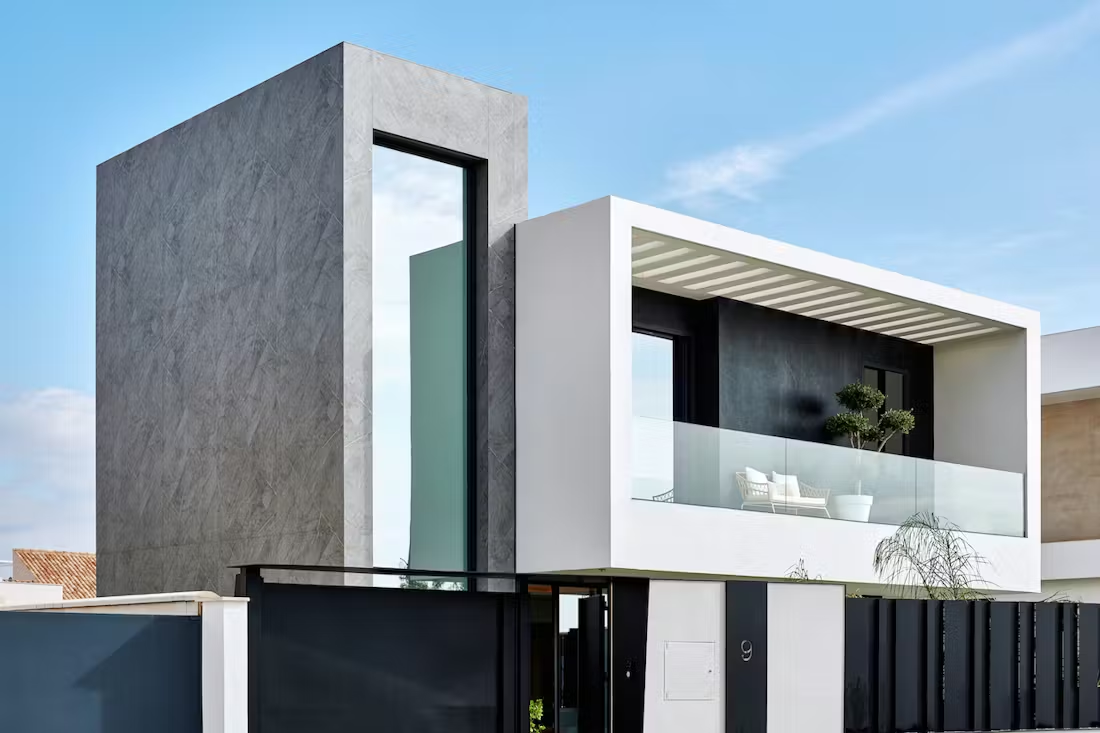
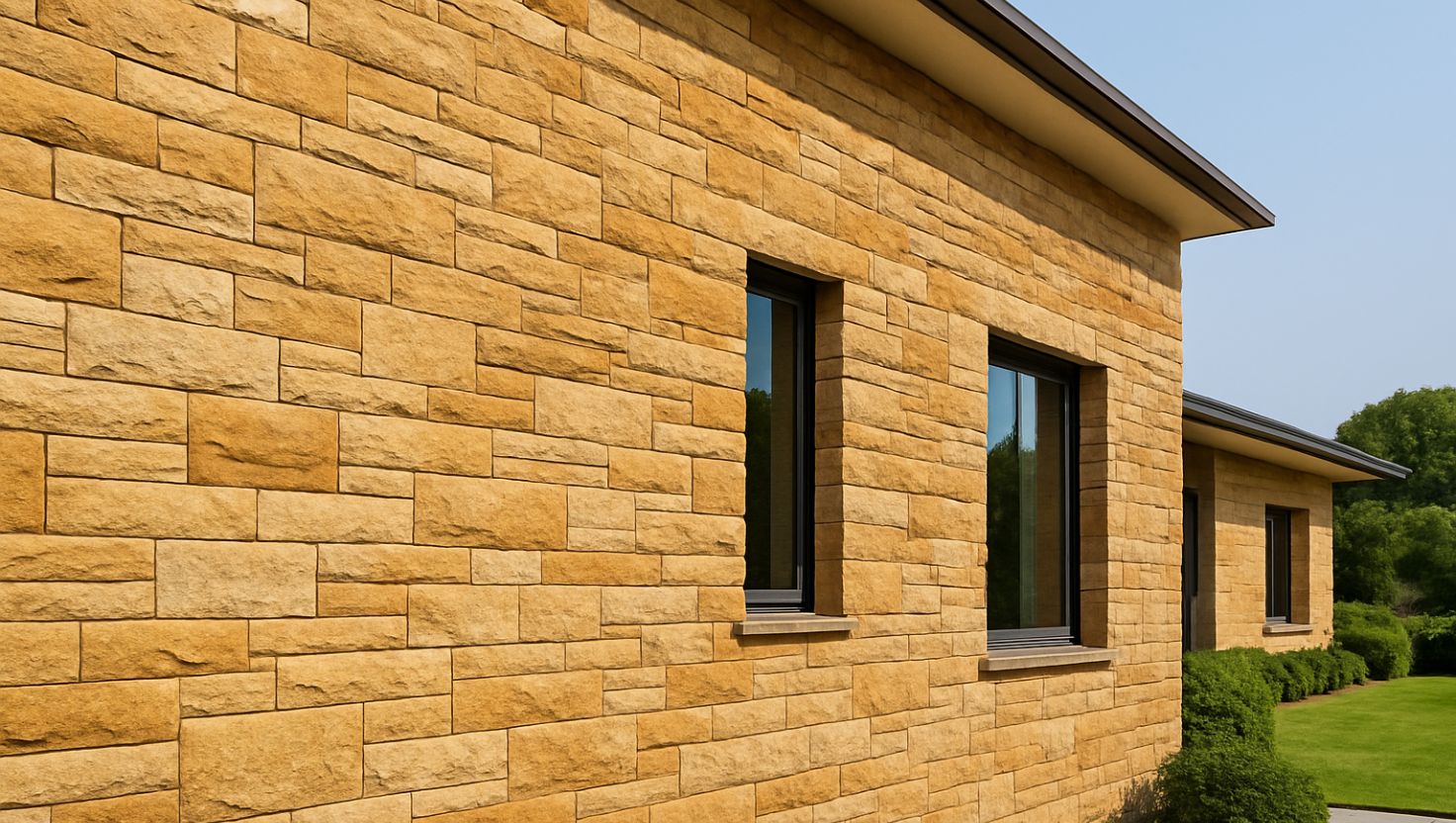
In the landscape of premium residential architecture, few materials possess the quiet authority of natural limestone. While glass, steel, and advanced polymers represent the technical frontiers of the modern envelope, limestone remains the definitive choice for those seeking a synthesis of geological history and structural elegance. It is a sedimentary rock that speaks to deep time, yet its neutral palette and tactile versatility allow it to adapt to both neo-classical manors and the minimalist geometries of the contemporary estate. Limestone Cladding for High-End Estates. To choose limestone is to move away from the ephemeral nature of “finishes” and toward the concept of a monolithic legacy.
However, the application of limestone in a high-end context is far more than an aesthetic exercise. As an organic material, limestone is porous, chemically reactive, and subject to the relentless laws of thermodynamics. In an era of increasingly volatile weather patterns and stringent building science requirements, the “cladding” is no longer just a decorative skin; it is a critical component of a multi-layered assembly that must manage moisture, thermal flux, and structural movement. The failure to respect the physics of the stone—such as its rate of water absorption or its coefficient of thermal expansion—can turn a multi-million-dollar facade into a liability defined by efflorescence, spalling, and internal decay.
True mastery in this domain requires a forensic understanding of the stone’s provenance and its assembly logic. Whether it is a French Beaumaniere, a Portuguese Moleanos, or a domestic Indiana limestone, each variety carries its own density, absorption rate, and compressive strength. Navigating these variables requires an analytical perspective that transcends surface beauty. To build an estate that will stand for a century, one must treat the limestone envelope as a living system, integrating ancient masonry wisdom with 21st-century rainscreen engineering.
Limestone cladding for high-end estates
To define the methodology of Limestone cladding for high-end estates, one must look past the visual texture and focus on the “assembly.” A common misunderstanding in the residential market is that the thicker the stone, the more durable the wall. In reality, the durability of a limestone facade is dictated by the “drainage cavity” behind it. In a high-end context, “luxury” is found in the precision of the joinery and the invisibility of the mechanical anchors that hold the stone in place. If the water cannot escape the cavity, the stone will eventually “weep,” leading to permanent staining and structural degradation of the substrate.
Oversimplification in this field often centers on “color consistency.” While a uniform cream or beige is often desired, a truly sophisticated architectural plan embraces the “movement” and fossilization inherent in the stone. The risk of seeking perfection is the “synthetic effect,” where natural stone begins to look like pre-cast concrete. Professional risk mitigation avoids this by utilizing “range samples”—large-scale mock-ups that show the full geological variation of the quarry—ensuring that the finished estate possesses the depth and authenticity that only millions of years of sedimentation can provide.
The engineering of these estates also necessitates a move toward the “Rainscreen” philosophy. Unlike traditional “wet-set” masonry where stone is mortared directly to a wall, modern high-end cladding is typically “dry-hung” using stainless steel brackets. This creates an air gap that allows the building to “breathe,” equalizing air pressure and preventing wind-driven rain from penetrating the interior. For a high-end estate, this technical nuance is the difference between a home that requires constant remediation and one that ages with grace.
The Systemic Evolution of Sedimentary Envelopes
Historically, limestone was a “mass” material. From the châteaux of the Loire Valley to the limestone townhouses of New York, the stone was the structure itself. The walls were thick, acting as thermal sponges that absorbed heat during the day and released it at night. The “mistake” in these historical buildings was rarely the stone, but rather the lack of a vapor barrier, which often led to interior dampness.
The mid-20th century saw a transition toward “thin-stone” veneers. As steel and concrete frames became the standard, limestone was sliced into 2-inch panels and “stuck” to the building. This era introduced the most significant structural risks in the history of the material. By removing the “mass” but failing to add “drainage,” designers created walls that trapped moisture, leading to the catastrophic failure of many post-war limestone facades.
Today, we are in the era of “Geological High-Performance.” We are seeing limestone used in conjunction with continuous exterior insulation and advanced CNC-carved geometries. The evolution has moved from stone as a “weight” to stone as a “performance membrane.” Modern high-end estates now utilize limestone that is thermally modeled and seismically engineered, allowing for the classic aesthetic of the Old World to meet the rigorous energy codes of the New World.
Conceptual Frameworks and Investigative Mental Models
Experienced architects use specific mental models to ensure that the stone selection aligns with the building’s environment.
1. The “Hygric Buffer” Framework
This model evaluates the stone’s ability to safely absorb and release moisture. A high-porosity limestone (like certain soft French stones) requires a much larger drainage cavity and more frequent sealing than a high-density, “low-absorption” stone (like a dolomitic limestone). The “cladding” is viewed not as a shield, but as a filter.
2. The “Thermal Expansion Loop”
Limestone expands and contracts at a different rate than the steel or concrete structure it covers. This framework focuses on “joint design.” A luxury estate avoids “tight joints” in favor of engineered expansion joints that allow the stone to “grow” in the summer sun without crushing its own corners or shearing its anchors.
3. The “Provenance-to-Performance” Model
This model traces the stone back to the specific “bench” (layer) of the quarry. Because limestone is a natural deposit, the top of a quarry might be soft and porous, while the bottom is hard and dense. For high-end estates, specifying the “bench” is as important as specifying the color.
Key Categories of Stone and Technical Trade-offs
The choice of limestone dictates the “structural DNA” of the project.
| Stone Origin | Density/Hardness | Absorption Rate | Primary Aesthetic | Trade-off |
| French (e.g., Caen) | Low to Moderate | High | Fine grain; creamy white. | Susceptible to freeze-thaw in cold climates. |
| Indiana (Domestic) | Moderate | Moderate | Consistent gray/buff; durable. | Can be perceived as “utilitarian” vs. imports. |
| Portuguese (Moleanos) | High | Low | Fossil-rich; beige to blue-gray. | Harder to carve; more brittle. |
| Israeli (Jerusalem Stone) | Very High | Very Low | Warm gold/cream; very hard. | High shipping cost; color variability. |
| Jura (German) | High | Low | Modern “cool” grays; very dense. | Can show “rust” spots if iron is present. |
Decision Logic: The “Freeze-Thaw” Threshold
In northern climates, the “Saturation Coefficient” is the most critical metric. If a limestone absorbs too much water and then freezes, the water expands by 9%, literally “blowing the face” off the stone (spalling). In these regions, a high-density stone with a low absorption rate (less than 3%) is a technical necessity, regardless of the desired color.
Detailed Real-World Scenarios Limestone Cladding for High-End Estates
Scenario 1: The “Bleeding” Anchor
A luxury estate in a coastal environment uses standard steel anchors to hang the limestone.
-
The Risk: Salt air causes the steel to rust inside the stone.
-
The Result: “Rust-jacking”—as the rust expands, it cracks the limestone from the inside out, creating unsightly orange streaks.
-
The Fix: Specifying Type 316 Stainless Steel anchors with a “thermal break” to prevent galvanic corrosion.
Scenario 2: The “Rising Damp” Effect
Limestone is installed all the way down to the soil line without a “water table” or capillary break.
-
The Risk: The stone acts as a wick, sucking up groundwater and salts (efflorescence).
-
The Result: A permanent white, chalky “tide line” at the base of the house that cannot be cleaned away.
-
The Fix: Utilizing a high-density granite or basalt “base course” before transitioning to the limestone.
Planning, Cost, and Resource Dynamics
The economics of limestone cladding are governed by the “Waste Factor” and “Logistics.”
Investment Range for High-End Limestone Envelopes
| Component | Cost Impact | Variable Factors |
| Material (Quarrying) | 30% – 40% | Rarity of the stone; “Waste” from carving. |
| Fabrication (CNC/Hand) | 20% – 30% | Complexity of moldings; “Veneer” vs. “Carved.” |
| Anchoring Systems | 10% – 15% | Wind-load requirements; seismic zones. |
| Installation (Labor) | 25% – 35% | Skill of the masons; site access. |
The Opportunity Cost of “Thin-Set”
While “thin-set” (glued) stone is 40% cheaper initially, its lifecycle cost is often triple that of a “mechanical-set” (anchored) system because it cannot be easily repaired or inspected for water damage.
Tools, Strategies, and Technical Support Systems
-
CNC Carving & 3D Modeling: Allowing for complex, classical cornices and moldings to be produced with millimetric precision, reducing the cost of hand-carving while maintaining the “estate” look.
-
Petrographic Analysis: A microscopic examination of the stone to identify internal flaws or reactive minerals before it leaves the quarry.
-
Digital “Dry-Lay”: Photographing every stone panel in the factory and arranging them digitally to ensure a perfect color blend before shipping.
-
Structural Silicone Glazing (SSG): Used in “hidden” joints to allow for movement while maintaining a water-tight seal.
-
Nuclear Moisture Gauges: Used during annual inspections to check for hidden water accumulation behind the stone without removing panels.
-
Laser Scanning: Creating a “Digital Twin” of the estate’s substrate to ensure the stone panels are fabricated to match the real-world dimensions of the concrete.
Risk Landscape and Taxonomy of Failure
Facade structural and aesthetic risks are “compounding.”
-
Chemical Incompatibility: Using the wrong sealant (e.g., an acetic silicone) that reacts with the calcium carbonate in the limestone, causing a permanent “halo” stain around the joints.
-
Thermal Bridging: The stainless steel anchors act as “cold bridges,” sucking heat out of the building and causing condensation—and mold—to form on the interior drywall.
-
The “Shadow” Stain: If the stone is not “back-sealed” or “side-sealed,” water can soak into the edges, creating a dark, wet look that persists for weeks after a rainstorm.
Governance, Maintenance, and Long-Term Adaptation
A limestone estate is a 100-year asset that requires a “stewardship” manual.
-
The “Neutral” Wash: Limestone should never be pressure-washed or cleaned with acidic “brick cleaners.” A low-pressure wash with a PH-neutral detergent is the only safe method.
-
The Sealant Cycle: The silicone or polyurethane joint sealants have a lifespan of 10-15 years. A governance plan must include a “re-caulking” budget.
-
The Weep-Hole Audit: Ensuring that the drainage holes at the base of the wall are not clogged by mulch, landscaping, or insects.
Measurement, Tracking, and Evaluation Metrics
-
Leading Indicators: Percentage of stones that pass “ASTM C97” (Absorption/Density) tests; results of on-site “Pull-Tests” for the anchors.
-
Lagging Indicators: Evidence of “Efflorescence”; number of cracked “lintel” stones over windows.
-
Documentation: A “Stone Ledger” that maps every panel to its quarry origin and its specific anchor type.
Common Misconceptions and Oversimplifications
-
“Sealing stone makes it ‘waterproof’.”
-
Correction: Sealing stone is a “breathable” treatment. It slows down water absorption but does not stop it. A poorly designed wall with a “sealed” stone will still fail if the drainage is blocked.
-
-
“Limestone is too soft for modern buildings.”
-
Correction: Limestone has a compressive strength often exceeding 4,000 PSI—higher than many types of concrete.
-
-
“All limestone turns yellow.”
-
Correction: Yellowing is usually caused by “iron oxidation” or the use of improper cleaning chemicals, not the stone itself.
-
-
“Imported stone is better.”
-
Correction: Domestic stones (like Indiana Limestone) are often superior in durability for harsh North American climates compared to softer European varieties.
-
Conclusion
The implementation of Limestone cladding for high-end estates is an exercise in both geological reverence and engineering discipline. It is a material that rewards those who respect its limitations and punishes those who treat it as a mere wallpaper. A successful limestone facade is one where the weight of the stone is balanced by the lightness of the engineering—where the ancient texture of the quarry meets the forensic precision of the modern rainscreen. By prioritizing the “invisible” load paths and moisture-management strategies, an owner can ensure that their estate does not merely exist in the environment, but thrives within it, maturing into a landmark that defines the landscape for generations to come.