Parametric Facade Modeling Services: The Definitive Pillar Guide
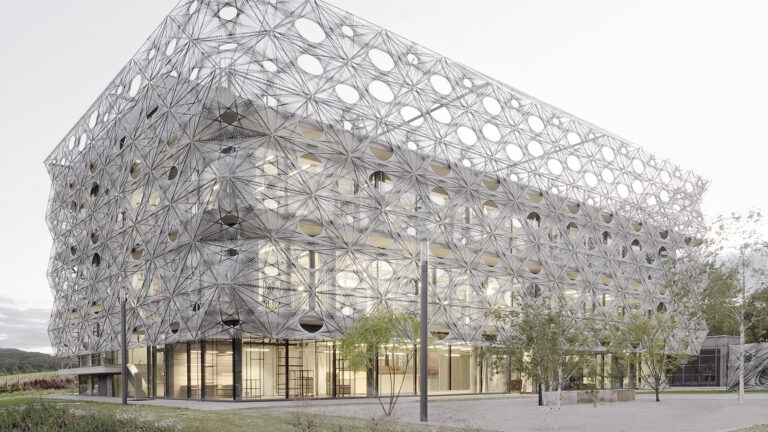
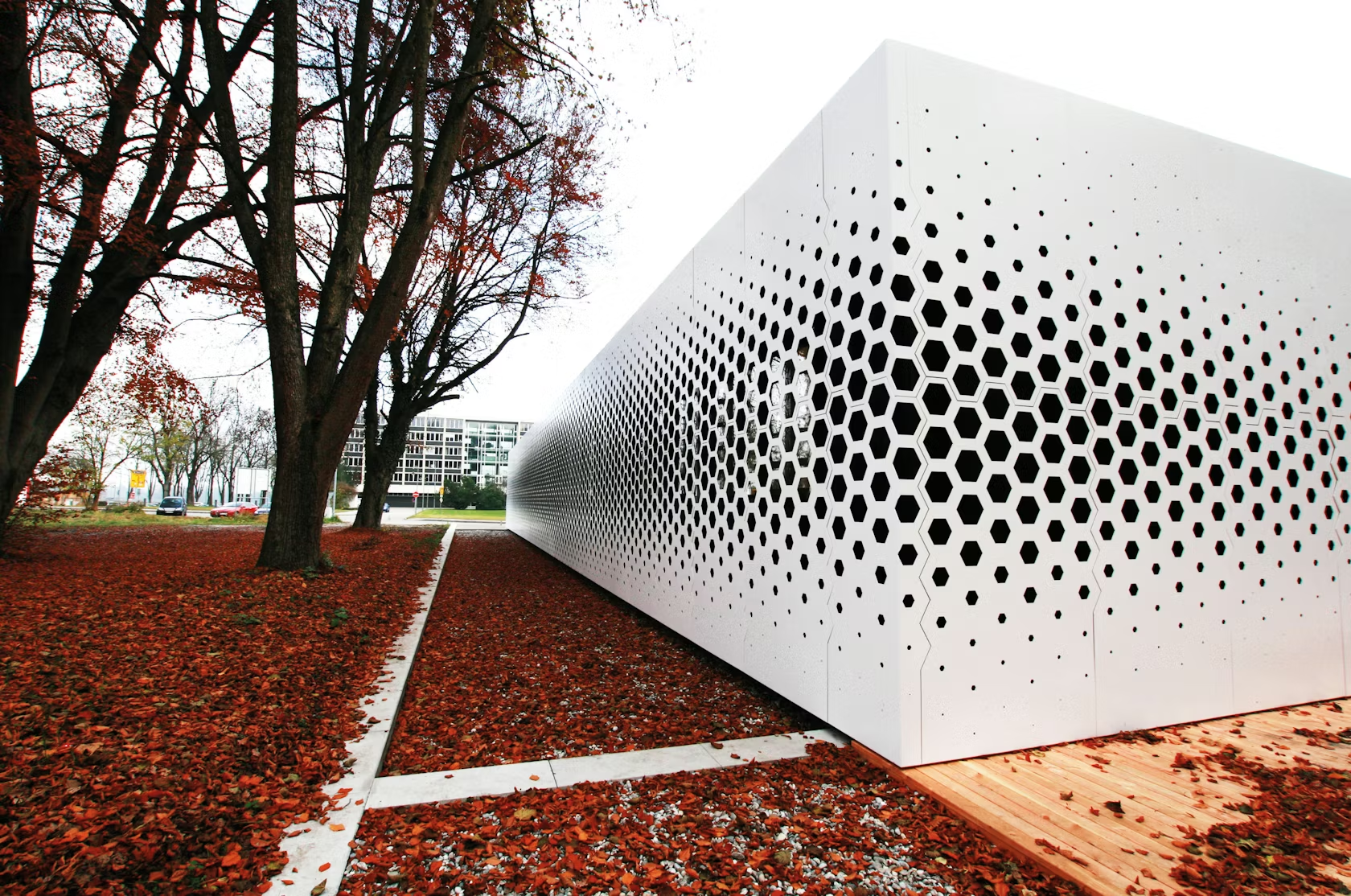
The architectural facade has transitioned from a static protective barrier into a high-performance, data-driven system. In the contemporary high-rise and institutional landscape, the building envelope is the primary site of intersection between environmental stressors, structural requirements, and aesthetic intent. This complexity has rendered traditional 2D drafting and even standard 3D modeling insufficient. Parametric Facade Modeling Services. The modern facade is an assembly of thousands of unique components, each reacting to solar orientation, wind pressure, and manufacturing tolerances. Managing this complexity requires a move toward algorithmic design, where the “geometry” is not drawn, but rather computed through sets of interrelated rules.
As buildings push the boundaries of geometry—moving toward fluid, organic forms and non-repetitive patterns—the manual management of design changes becomes a prohibitive fiscal and temporal risk. A single adjustment to a building’s curvature can ripple through thousands of panel dimensions, glass types, and anchor positions. The shift toward computational workflows allows these changes to happen synchronously. By establishing a “logic of the part,” architects and engineers can simulate a myriad of design iterations in the time it once took to draft a single section. This is not merely about speed; it is about the ability to optimize for performance outcomes that were previously invisible.
In this context, the facade is no longer treated as a singular surface, but as a population of data points. Every panel carries information regarding its weight, cost, material origin, and thermal performance. This “information-heavy” approach to the building skin is the foundation of modern delivery, bridging the gap between the architect’s vision and the fabricator’s CNC machine. To navigate this landscape, a deep understanding of parametric logic is required—not just as a tool for “cool shapes,” but as a rigorous methodology for risk mitigation and asset optimization over a fifty-year lifecycle.
Parametric facade modeling services
To define Parametric facade modeling services is to describe the outsourcing of logic. Unlike traditional drafting services that deliver a set of static drawings, parametric modeling provides a “scripted” environment where the building envelope is defined by variables (parameters) and relationships. A common misunderstanding in the development sector is that these services are only for “expensive” or “curvy” buildings. In reality, parametric logic is most valuable when applied to highly repetitive, high-performance curtain walls, where it can be used to “rationalize” complex panels into a limited number of molds, saving millions in fabrication costs.
Oversimplification often occurs when stakeholders view the parametric model as a “black box” that generates designs automatically. Professional services in this domain focus on “Design Rationalization”—the process of taking an unbuildable architectural concept and applying geometric constraints that align with manufacturing realities. A luxury facade might look free-form, but through parametric modeling, it is often revealed to be a series of cold-bent glass panels or standardized extrusions with varying connection angles. The goal is to achieve visual complexity without the “bespoke” price tag.
The risk of ignoring these services is the “Design-to-Fabrication Gap.” When a complex facade is modeled traditionally, the fabricator often has to “re-draw” the entire building to make it buildable, leading to massive change orders and schedule slips. High-fidelity parametric services produce “construction-ready” data—direct-to-fabrication files that include every bolt hole, gasket length, and panel fold. This creates a “single source of truth” that spans from the early competition phase through to the maintenance of the finished structure.
Contextual Background: From Geometric Rigidity to Algorithmic Fluidity
The evolution of facade modeling is a history of increasing “data density.” In the mid-20th century, the “stick-built” curtain wall was the pinnacle of technology, defined by the repetition of a few standard sections. Geometry was constrained by the limits of manual calculation and the physical limitations of the T-square. The “logic” of the building was the grid.
The 1990s introduced early CAD, which digitized the drawing board but did not fundamentally change the logic of the wall. The breakthrough came with the adaptation of aerospace and automotive software (such as CATIA) for architecture, spearheaded by firms like Gehry Partners. For the first time, complex curvatures could be mathematically defined and, more importantly, “unrolled” into flat sheets for cutting. This was the birth of “BIM level 3” thinking, where the model and the machine became one.
Today, we are in the era of “Generative Engineering.” The focus has moved from merely representing geometry to “evolving” it. We use parametric modeling to run thousands of solar simulations, automatically adjusting the angle of every fin on a building to maximize natural light while minimizing heat gain. The facade has moved from a “drawing” to an “algorithm.”
Conceptual Frameworks and Computational Mental Models
Engaging with parametric services requires a shift in how one conceptualizes the building envelope.
1. The “Logic of the Part” Framework
Instead of modeling the “whole” and then subdividing it, this model focuses on the “individual panel.” Rules are established: “If the angle between panels is > 5 degrees, use a custom bracket; if < 5 degrees, use a standard one.” The building then “assembles itself” based on these rules. This framework reveals the hidden costs of architectural gestures before a single panel is made.
2. The “Geometric Rationalization” Model
This model looks for “clusters” of similarity. If a facade has 1,000 unique glass panes, parametric modeling can be used to “nudge” the geometry so that 800 of them are identical, while maintaining the overall visual curve. It is a mental model that balances aesthetic “smoothness” with the fiscal “flatness” of the budget.
3. The “Information-to-Matter” Pipeline
This model views the facade as a series of instructions for a robot. It prioritizes the “metadata” of the panel—its weight, the date it was fired in the kiln, its thermal coefficient—over its visual appearance. In this framework, the model is not a picture of the building; it is the building’s digital twin.
Key Categories of Parametric Workflows and Trade-offs
The choice of workflow dictates the flexibility of the design and the accuracy of the fabrication data.
| Workflow Type | Primary Goal | Aesthetic Freedom | Technical Complexity | Trade-off |
| Associative Modeling | Linking panels to structural frame. | Moderate | High | Any change to the frame breaks the model links. |
| Algorithmic Optimization | Reducing panel types/material waste. | Low to Moderate | Very High | Can lead to a “standardized” look. |
| Generative Design | Exploring 10,000 solar/wind options. | Extreme | Very High | Requires massive computing power and clear goals. |
| Direct-to-Fabrication | Automated CNC/G-code output. | Moderate | High | Requires deep knowledge of specific factory machines. |
| Kinetic/Adaptive | Modeling moving solar shades. | High | Extreme | High mechanical failure risk; expensive maintenance. |
Decision Logic: The “Rigidity” of the Script
A common error in Parametric facade modeling services is creating a script that is “too brittle.” If the script is built too rigidly, a simple change (like adding a floor) can crash the entire model. The logic must be “modular,” allowing for local changes without destroying the global geometry.
Detailed Real-World Scenarios Parametric Facade Modeling Services
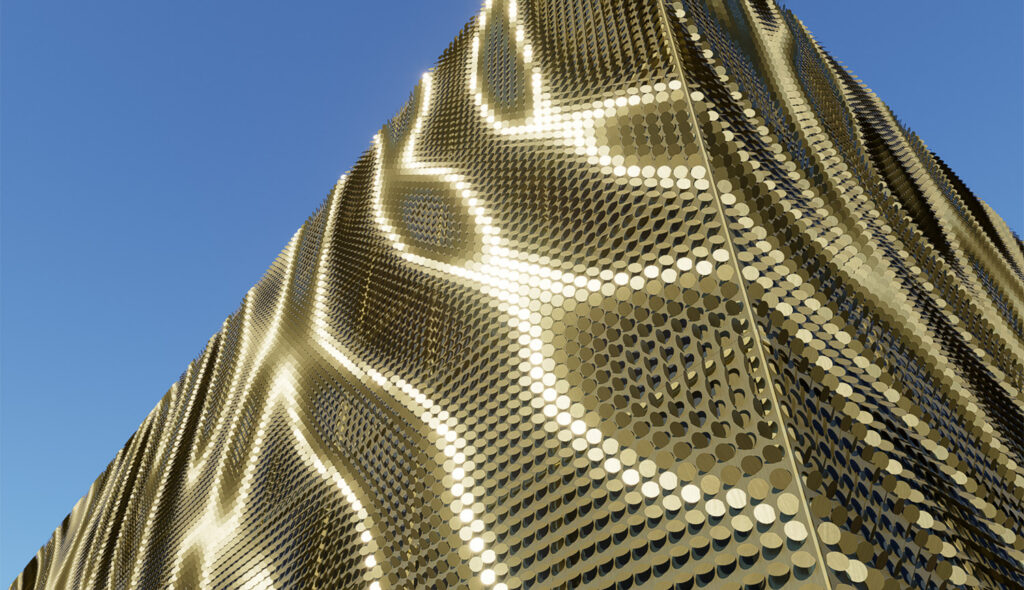
Scenario 1: The “Curved Glass” Dilemma
An architect designs a skyscraper with a complex, double-curvature glass facade.
-
The Problem: Double-curved glass costs 10 times more than flat glass.
-
The Parametric Solution: Rationalize the surface into “cold-bent” flat glass. By twisting flat glass within its elastic limit during installation, the “curve” is achieved at a fraction of the cost.
-
The Model: The parametric model calculates the exact stress on every pane to ensure the glass won’t shatter over time.
Scenario 2: The “Solar Shading” Matrix
A commercial office tower requires high transparency but must meet strict “Energy Use Intensity” (EUI) targets.
-
The Strategy: A parametric script generates 5,000 unique aluminum fins. Each fin’s depth and angle are determined by the specific amount of sun hitting that exact point on the building.
-
Second-Order Effect: The script also calculates the “shadowing” of the fins on each other, preventing “hot spots” on the glass.
Planning, Cost, and Resource Dynamics
The “Cost” of parametric services is a “Front-Loaded” investment. While it increases the design fee by 10-20%, it typically reduces construction change orders by 50% and fabrication waste by 30%.
Investment Variance and Efficiency Table
| Phase | Activity | Cost Impact | Potential Saving |
| Schematic | Geometric Rationalization. | High (Consultant fees) | Millions in material “standardization.” |
| Design Dev | Automated Shop Drawings. | Low (Algorithmic speed) | Reduces drafting staff by 70%. |
| Procurement | Direct-to-Fabrication files. | Moderate | Eliminates “Re-drawing” by the factory. |
| Construction | Field Tolerance Management. | Low | Reduces on-site “fixes” and shim-work. |
Tools, Strategies, and Support Systems
The “Computational Stack” for a modern facade involves several layers of software and specialized expertise.
-
Rhino + Grasshopper: The industry standard for “Visual Programming,” allowing designers to create complex rules without writing raw code.
-
Revit + Dynamo: Integrating parametric logic into the Building Information Modeling (BIM) environment for coordination with MEP and Structure.
-
Ladybug & Honeybee: Environmental plugins that allow the facade model to “see” the sun and “feel” the heat in real-time.
-
Kangaroo: A physics engine used to simulate the “tension” in tensile structures or the “flex” in cold-bent glass.
-
Custom Python Scripting: For highly specific tasks, such as automating the export of 10,000 individual fabrication drawings.
-
Cloud Computing (Parallel Processing): Running “Genetic Algorithms” that test thousands of facade variations to find the “perfect” balance of cost, light, and heat.
Risk Landscape and Taxonomy of Computational Failure
The failure of a parametric system is usually a failure of “Logic” rather than “Geometry.”
-
The “Garbage In, Garbage Out” Risk: If the environmental data used for solar modeling is incorrect, the “optimized” facade will perform worse than a standard one.
-
Tolerance Accumulation: The model assumes the building is perfect. In reality, concrete moves. If the parametric script doesn’t include “slack” or “tolerance zones,” the panels won’t fit on-site.
-
The “Black Box” Liability: If an error exists in the script’s code, and 5,000 panels are manufactured incorrectly, the liability becomes astronomical. Verification of the script’s logic (Peer Review) is essential.
Governance, Maintenance, and Long-Term Adaptation
A parametric model is a “Living Document.” Its value continues long after the building is enclosed.
-
Digital Twin Handover: The owner receives the model, which includes the unique ID for every glass pane. If pane #4,502 breaks, the owner can order a replacement with perfect dimensions and coatings instantly.
-
Adaptive Monitoring: Sensors on the facade can feed data back into the parametric model to track “deflection” or “sealant failure” over time.
-
Adjustment Triggers: If a neighboring building is built, changing the solar profile, the model can be used to re-calculate the HVAC loads based on the “New Shadow.”
Measurement, Tracking, and Evaluation Metrics
-
Leading Indicators: “Panel Uniqueness Ratio” (how many different types of panels exist); “Rationalization Accuracy” (how close the flat panels are to the intended curve).
-
Lagging Indicators: Total weight of aluminum scrap at the factory; time taken from “Design Approval” to “Fabrication Start.”
-
Documentation Examples:
-
The Rationalization Report: Proving how $X million was saved by reducing panel complexity.
-
The Geometric Control Document: The “Bible” for the project, defining the mathematical origin points for every component.
-
Common Misconceptions and Oversimplifications
-
“Parametric modeling is just for ‘Zaha-style’ buildings.”
-
Correction: It is most effective for “boring” rectangular buildings where it can optimize energy performance and reduce material waste.
-
-
“The software does the design.”
-
Correction: The human designs the “Logic.” The software merely executes the repetition of that logic.
-
-
“It makes the facade more expensive.”
-
Correction: While the modeling is more expensive, the installed cost is almost always lower due to fabrication efficiencies.
-
-
“BIM is the same as Parametric Modeling.”
-
Correction: BIM is a database; Parametric Modeling is a logic engine. You can have a BIM model that has zero parametric intelligence.
-
Conclusion
The adoption of Parametric facade modeling services marks the end of the “drawing” as the primary vehicle of architectural intent. We have entered an era where the building envelope is a mathematical expression, a dynamic response to the complex pressures of our environment and our economy. For the developer, this represents a powerful tool for de-risking the most expensive part of a high-rise. For the architect, it is a way to reclaim mastery over the “making” of the building. As we face a future of stricter carbon mandates and more complex urban sites, the ability to “compute” the facade will no longer be a luxury—it will be the baseline for any project that aspires to longevity and performance.