How to Reduce Exterior Cladding Cost: A Professional Strategy
The architectural envelope often represents the single largest line item in a building’s exterior budget, frequently accounting for 15% to 25% of total construction costs. How to Reduce Exterior Cladding Cost. This financial weight is not merely a product of surface aesthetics; it is the result of a complex interplay between structural requirements, thermal performance mandates, and labor-intensive installation sequences. When developers and architects seek to optimize these expenses, they often fall into the trap of “value engineering”—a process that frequently sacrifices long-term durability for immediate capital savings.
Achieving true fiscal efficiency in cladding requires a shift in perspective. It is not about selecting the cheapest material available, but rather about optimizing the systemic logic of the wall assembly. A low-cost material that requires an expensive, bespoke secondary support system or specialized, high-cost labor may end up costing more than a premium material designed for rapid, standardized installation. The nuance lies in identifying where complexity can be removed without compromising the building’s protective “immune system.”
Modern cladding strategies must also navigate a landscape of tightening energy codes and volatile global commodity markets. Fluctuations in the price of aluminum, timber, and petroleum-based polymers can render a project’s budget obsolete within a single fiscal quarter. Therefore, a definitive strategy for cost reduction must be multi-dimensional, accounting for procurement logistics, material yield, and the total cost of ownership over the building’s lifecycle.
Understanding “how to reduce exterior cladding cost”
In the professional architectural sphere, the question of how to reduce exterior cladding cost is frequently answered with oversimplified material swaps. A project might switch from natural stone to a ceramic “look-alike” to save on raw material prices. However, if that ceramic tile requires a more complex mechanical fastening system due to its brittleness, the “savings” are evaporated by increased labor hours and specialized hardware. To truly reduce costs, one must analyze the “systemic cost density”—the sum of material, substructure, labor, and waste.
One significant oversimplification is the disregard for “module logic.” Most cladding materials are manufactured in standard sizes. When a design ignores these dimensions, it creates a high “off-cut” percentage. If a facade requires 4.5-foot panels but the material is sold in 8-foot sheets, nearly half the material paid for is discarded as waste. A professional editorial approach to cost reduction emphasizes the alignment of architectural “grids” with manufacturing standards to ensure nearly 100% material yield.
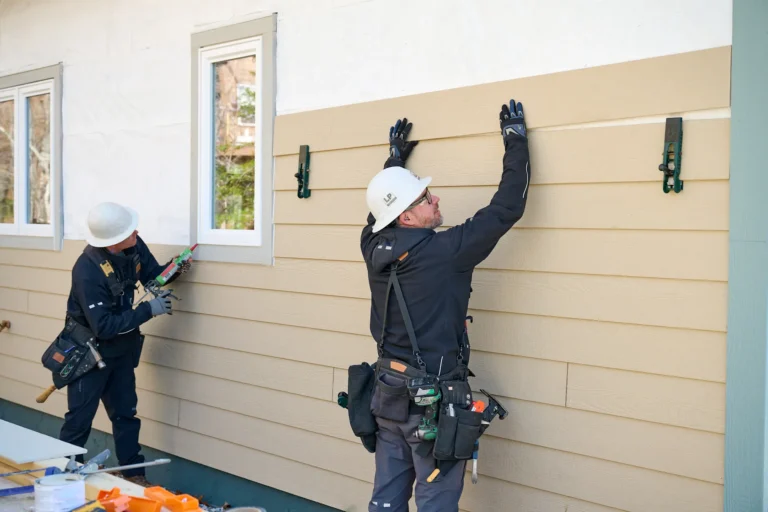
Furthermore, the risk of ignoring the “installation velocity” is high. In a high-interest-rate environment, the time a building spends behind scaffolding is a major indirect cost. A cladding system that is 10% more expensive in material but 30% faster to install can drastically reduce the cost of construction financing and site overhead. Therefore, “low cost” is a temporal metric as much as it is a material one.
Historical and Systemic Context: The Cost of Protection
Historically, the cost of a building’s exterior was tied to mass. Thick masonry walls were expensive because of the sheer volume of material and the manual labor required to stack it. The “cost reduction” of the early 20th century was the transition to the frame-and-skin model, which reduced material volume significantly. However, this introduced a new cost: the complexity of the “joint.”
As we moved toward thinner, more specialized skins, the financial burden shifted from the material itself to the engineering of the connections. In the contemporary era, we are seeing a return to prefabrication—unitized systems that move labor from the expensive, weather-dependent construction site to the controlled, efficient environment of a factory. This systemic evolution reflects a move away from “craft” toward “industrialized assembly” as the primary means of controlling expenditure.
Conceptual Frameworks for Fiscal Optimization
To navigate the myriad choices in exterior finishes, developers utilize specific mental models that prioritize the bottom line without sacrificing integrity.
-
The Substructure-First Framework: This model posits that the cladding material is secondary to the “girt” or rail system behind it. By using a standardized, adjustable aluminum or galvanized steel rail system, a project can accommodate a variety of cladding types at a lower labor cost.
-
The 80/20 Aesthetic Rule: This framework suggests that 80% of a building’s visual impact is concentrated at the first two stories (the pedestrian level). Cost reduction is achieved by using premium, high-durability materials at the base and switching to lower-cost, high-yield materials (like EIFS or standard metal panels) for the upper floors where detail is less visible.
-
The Lifecycle Cost Buffer: This model evaluates the “repainting and resealing” cycle. A material with a $0 maintenance requirement over 20 years (like pre-patinated zinc) is compared against a “cheap” painted steel that requires recoating every 7 years.
Key Material Categories and Economic Trade-offs
The choice of material dictates the underlying cost structure of the entire wall assembly.
| Material Category | Relative Material Cost | Installation Speed | Substructure Complexity | Maintenance Risk |
| Fiber Cement | Low | Moderate | Standard | Moderate (Paint) |
| ACMs (Metal Composite) | Moderate | Fast | Proprietary Rails | Low |
| EIFS (Stucco-look) | Very Low | Fast | Integrated | High (Cracking) |
| Terracotta Rainscreen | High | Slow | Heavy/Complex | Very Low |
| Engineered Wood | Moderate | Moderate | Standard | High (Fading) |
| Vinyl / Polymer | Very Low | Very Fast | Minimal | Moderate (UV) |
Realistic Decision Logic
When a project faces a budget shortfall, the logic should not be to find a “cheaper version” of a premium material. Instead, the logic should be to switch to a material category that utilizes a simpler installation method. For example, moving from a heavy stone veneer (which requires structural shelf angles) to a lightweight stone-impregnated fiber cement (which uses standard screws) can reduce the structural steel budget significantly.
Detailed Real-World Scenarios How to Reduce Exterior Cladding Cost
Scenario 1: The Commercial Strip-Mall Retrofit
The goal is a “modern” look on a tight budget.
-
Strategy: Utilize large-format ACM panels only at the entrances; use high-quality EIFS for the long spans of the side walls.
-
Cost Logic: The high-cost material is used sparingly where it has the most “curb appeal” impact.
-
Failure Mode: Mixing systems without proper “transition flashings,” leading to water leaks at the material borders.
Scenario 2: The Multi-Family Residential Block
The project is over budget due to rising labor costs.
-
Strategy: Switch from a “stick-built” rainscreen to a “pre-assembled” panelized system.
-
Cost Logic: Higher material cost is offset by a 40% reduction in on-site man-hours.
-
Second-Order Effect: Reduced scaffolding rental time saves an additional $5,000 per month.
Planning, Cost, and Resource Dynamics
The financial architecture of a facade project is often skewed by “hidden” logistics costs.
| Expense Category | Typical % of Cladding Budget | Impact of Optimization |
| Raw Material | 35% – 45% | Moderate (Bulk purchasing) |
| Fasteners & Substructure | 10% – 15% | High (Standardization) |
| On-site Labor | 30% – 40% | Very High (System simplicity) |
| Waste / Off-cuts | 5% – 10% | Moderate (Grid alignment) |
| Freight & Storage | 2% – 5% | Low (Local sourcing) |
The “Waste Tax”
It is common for projects to order 15% “overage” for cladding materials. On a $200,000 cladding contract, that is $30,000 in material that essentially goes into a dumpster. By utilizing BIM (Building Information Modeling) to pre-calculate every panel’s location, that overage can be reduced to 3%, immediately saving $24,000.
Tools, Strategies, and Support Systems
-
Parametric Design Tools: Software that automatically adjusts the building’s “grid” to match material sheet sizes.
-
BIM Coordination: Finding “clashes” between the cladding and the HVAC vents before they reach the site, preventing expensive field modifications.
-
Regional Procurement: Sourcing materials within a 500-mile radius to eliminate high shipping costs and import duties.
-
Value-Stream Mapping: Analyzing the installer’s workflow to identify where “dead time” (waiting for materials) is inflating labor costs.
-
Multi-Purpose Substrates: Using rigid insulation that also acts as the air and water barrier, eliminating two labor steps.
-
Direct-to-Manufacturer Ordering: Bypassing distributors for large-scale projects to secure factory-direct pricing.
Risk Landscape and Failure Modes
Reducing costs is dangerous if it ignores the “Risk of Recurrence.” A cheap cladding system that fails in Year 3 is the most expensive system possible.
-
The Fastener Shortcut: Using galvanized screws instead of stainless steel in a coastal environment to save $2,000. The result is “rust weeping” and panel failure within five years.
-
The “Unvented” Cavity: Skipping the rainscreen gap to save on wall thickness. This leads to moisture entrapment and rot in the structural sheathing.
-
Compounding Risks: When a low-cost material (like vinyl) is paired with a low-cost installer, the lack of oversight leads to improper expansion gaps. In the first summer, the panels “buckle” and pop off the wall.
Governance, Maintenance, and Long-Term Adaptation
Cost reduction does not end at the “Certificate of Occupancy.” A building’s “Fiscal Governance” includes the maintenance cycle.
The Low-Cost Maintenance Checklist
-
Bi-Annual Sealant Inspection: Replacing a $10 bead of caulk today prevents a $10,000 mold remediation tomorrow.
-
Drainage Path Verification: Ensure that “low cost” landscaping (like mulch) hasn’t blocked the weep holes at the base of the cladding.
-
Color Fastness Monitoring: For lower-cost polymers, tracking UV degradation helps plan for a singular, bulk-discounted repainting project in Year 12, rather than piecemeal repairs.
Measurement, Tracking, and Evaluation
How do we quantify if we actually saved money?
-
Leading Indicators: The “Waste Percentage” calculated from the final dumpster audit.
-
Lagging Indicators: Total labor hours per square foot compared to industry benchmarks for that material.
-
Qualitative Signals: The “Ease of Install” feedback from the site foreman; if the crew struggled, the system was likely too complex for the budget.
Common Misconceptions and Oversimplifications
-
“Natural materials are always better”: Natural wood and stone often have the highest “hidden costs” in labor and maintenance.
-
“EIFS is just cheap junk”: Modern, drainable EIFS is a highly engineered system that provides excellent “outsulation” if installed correctly.
-
“Thicker panels are more durable”: Not necessarily; a thin, high-pressure laminate (HPL) is often more impact-resistant than a thick, soft cedar plank.
-
“The manufacturer’s price is the final price”: Freight, tariffs, and the cost of the proprietary clips often double the “per square foot” quote.
-
“Doing it yourself saves money”: In professional cladding, specialized tools and the risk of voiding warranties make professional installation a fiscal necessity.
Synthesis and Strategic Judgment
The objective of how to reduce exterior cladding cost is to maximize the “yield” of every dollar spent. This is achieved through the ruthless elimination of material waste, the simplification of the labor sequence, and the protection of the building’s thermal integrity. A senior editor’s perspective suggests that the most profitable buildings are not those with the cheapest skin, but those where the skin was designed with a deep understanding of manufacturing and installation realities. True economy is found in the elegance of the assembly, not the price of the part.