Best Exterior Cladding Options: A Definitive Guide to Building Envel
The architectural envelope serves as the primary interface between a structure’s internal environment and the volatile external world. Choosing a cladding system is not merely an aesthetic exercise; it is a complex engineering decision that dictates a building’s thermal efficiency, structural longevity, and moisture management capabilities for decades. Best Exterior Cladding Options. As contemporary building codes tighten around energy performance and fire safety, the criteria for evaluating materials have shifted from surface-level beauty to systemic integration.
A high-performance exterior must resolve the inherent tension between permeability and protection. It must allow the building to “breathe” to prevent interstitial condensation while remaining an impenetrable barrier against bulk water and wind-driven rain. This duality requires a sophisticated understanding of material physics—how different substrates expand and contract at varying rates, how UV radiation degrades chemical bonds in polymers, and how capillary action can draw water into the most microscopic of fissures.
In this context, the search for the “perfect” material is often a misguided endeavor. The focus should instead remain on the specific environmental stressors of a site—the salt air of a coastline, the freeze-thaw cycles of a high-altitude plateau, or the intense solar radiation of a desert. The following analysis moves beyond the typical pros-and-cons lists to provide a deep, editorial exploration of how modern cladding systems function as integrated assemblies.
Understanding “best exterior cladding options”
When stakeholders search for the best exterior cladding options, they are frequently met with marketing-driven rankings that prioritize visual trends over technical resilience. In a professional editorial context, “best” is a relative term defined by the convergence of climate data, budget lifecycle, and structural compatibility. A material that is superlative for a single-family home in the Pacific Northwest may be a catastrophic choice for a high-rise commercial structure in the Gulf Coast.
One of the primary oversimplifications in this field is the isolation of the cladding material from the rest of the wall assembly. Cladding does not work in a vacuum; it is the visible component of a multi-layered system that includes air barriers, vapor retarders, drainage planes, and thermal insulation. To judge a cladding option solely by its durability is to ignore its role in the building’s overall hydrothermal performance. If a high-durability material like fiber cement is installed without a proper rainscreen gap, it can trap moisture against the sheathing, leading to systemic rot despite the cladding itself remaining intact.
Furthermore, the “best” option must account for the skill level of local labor. A sophisticated, European-engineered zinc system is only as effective as the technician performing the standing-seam folds. Oversimplified planning often fails to account for these “soft” variables, leading to a gap between the theoretical performance of a material and its real-world execution. True mastery in cladding selection involves balancing these material properties with the human and environmental realities of the project.
Deep Contextual Background
The history of cladding is essentially a history of man’s attempt to decouple the load-bearing function of a wall from its protective function. In ancient masonry traditions, the “cladding” was the wall itself—massive stone or brick units that relied on thickness to manage moisture (the “mass wall” effect). These walls would absorb water during a storm and slowly release it through evaporation, provided the wall was thick enough to prevent the moisture from reaching the interior.
The Industrial Revolution introduced steel and reinforced concrete frames, which liberated the exterior wall from carrying the building’s weight. This gave birth to the curtain wall and the modern concept of “cladding.” However, this liberation came with a cost: walls became thinner and less thermally stable. The mid-20th century saw an explosion in synthetic materials, such as vinyl and early EIFS (Exterior Insulation and Finish Systems), which prioritized cost and speed but often failed to account for moisture entrapment, leading to the “leaky condo” crises observed in various global markets.
Today, we are in an era of “performative” cladding. We no longer expect a wall to just sit there; we expect it to manage solar gain, provide high R-values, and perhaps even generate energy through integrated photovoltaics. This evolution marks a return to complexity, where the skin of a building is viewed as a biological membrane rather than a static shield.
Conceptual Frameworks for Material Selection
To navigate the vast array of available materials, one can apply specific mental models that categorize priorities.
-
The Rainscreen Principle: This framework views the exterior as two distinct layers: an outer decorative screen that sheds the majority of water and an inner air-and-water barrier that provides the final line of defense. The “gap” between them is the most critical component, allowing for pressure equalization and drainage.
-
The Embodied Carbon Filter: This model evaluates cladding based on its environmental “debt.” It compares the carbon cost of manufacturing and transporting a material (like high-fired ceramic) against its lifespan and energy-saving potential.
-
The Thermal Bridge Model: This framework focuses on the attachment points. Even the most efficient insulation is undermined if metal cladding brackets create “heat highways” that bypass the thermal layer, leading to energy loss and potential condensation at the fastener sites.
Key Categories and System Variations
Selecting among the best exterior cladding options requires a granular understanding of material categories and their inherent trade-offs.
| Material Category | Lifespan (Years) | Maintenance Level | Best For | Primary Trade-off |
| Fiber Cement | 30–50 | Moderate (Paint) | Residential/Low-rise | Heavy; requires specialized cutting |
| Metal (Zinc/Copper) | 80–100+ | Very Low | High-end/Coastal | High initial cost; technical install |
| Engineered Wood | 20–30 | High | Natural Aesthetic | Susceptible to moisture if neglected |
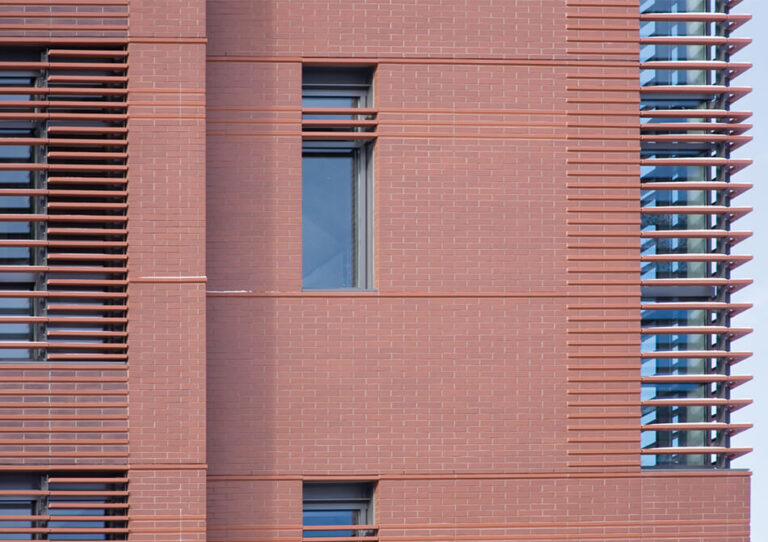
| Terracotta/Ceramic | 60–100 | Low | Commercial/Pillar assets | High weight; expensive substructure |
| Thermally Modified Timber | 25–40 | Moderate | Sustainable Design | Brittle; limited structural use |
| Brick Veneer | 100+ | Low | Traditional/Urban | Slow install; high seismic mass |
Decision Logic: The Hierarchy of Needs
When choosing, the logic should follow a specific path:
-
Fire Rating: Does the material meet NFPA 285 or local equivalents?
-
Wind Load: Can the fastening system withstand regional gust calculations?
-
Hydrothermal Movement: How much will a 30-foot panel expand in direct 100°F sun?
-
Aesthetics: Finally, does the texture and color align with the architectural intent?
Detailed Real-World Scenarios Best Exterior Cladding Options
Scenario 1: The High-Exposure Coastal Retreat
In a coastal environment, salt spray and high winds are constant. A custom metal cladding (like grade 316 stainless steel or zinc) is often superior.
-
Constraint: Zinc requires a specific backside ventilation to prevent “white rust” corrosion.
-
Failure Mode: Using aluminum fasteners with copper cladding, causing galvanic corrosion.
-
Second-Order Effect: The patina of the metal will change over time, potentially staining the sidewalk or landscaping below if drainage isn’t managed.
Scenario 2: The Urban Retrofit (Fire Safety Focus)
Modernizing a 1970s concrete high-rise requires a lightweight, non-combustible solution. Terracotta rainscreens are frequently utilized here.
-
Decision Point: Should the insulation be mineral wool (non-combustible) or polyiso (higher R-value but combustible)?
-
Constraint: The existing structure may not support the weight of traditional brick.
Planning, Cost, and Resource Dynamics
The economic reality of cladding is often obscured by “per square foot” pricing that ignores the substructure.
| Cost Component | Range (USD/sq ft) | Factors of Variability |
| Material | $5 – $60 | Global commodity prices (Metal/Oil) |
| Substructure/Girts | $2 – $12 | Thermal break requirements |
| Labor | $8 – $35 | Union rates vs. general contracting |
| Equipment (Scaffold) | $1 – $5 | Building height and site accessibility |
The “Longevity Premium”
Investing in a $40/sq ft zinc system versus a $10/sq ft synthetic system may seem irrational in a 5-year pro forma. However, when the 50-year lifecycle is calculated—including the cost of three repainting cycles and one full replacement for the cheaper material—the “expensive” option often proves to be the most fiscally responsible.
Tools, Strategies, and Support Systems
-
Hygrothermal Analysis (WUFI): Software used to simulate how moisture and heat move through a specific cladding assembly over time.
-
3D Laser Scanning: Crucial for retrofits to ensure the new cladding system fits the “as-built” reality of a warped or settled building.
-
Thermal Break Brackets: Non-conductive shims or brackets that prevent thermal bridging at the cladding attachment points.
-
Integrated Air Barriers (WRB): High-performance membranes that act as both the water shield and the air seal.
-
BIM Coordination: Ensuring that cladding penetrations (windows, vents, lights) are pre-planned to avoid “field-cutting” which voids warranties.
Risk Landscape and Failure Modes
The failure of a cladding system is rarely a result of the material itself “rotting” in isolation. It is almost always a failure of the joints and transitions.
-
Taxonomy of Failure:
-
Adhesion Failure: Sealants losing their bond due to UV exposure.
-
Fastener Fatigue: Metal fatigue from thousands of cycles of wind-loading and thermal expansion.
-
Bulk Water Intrusion: Water bypassing the cladding at window headers or roof parapets.
-
-
Compounding Risks: A small leak in a high-rise cladding system can travel down the internal structure, appearing as a “roof leak” ten floors below, making diagnostics incredibly expensive.
Governance, Maintenance, and Long-Term Adaptation
A building’s skin is a living system that requires a governance manual. This is a document provided to the building owner detailing exactly how to care for the assembly.
The 5-Layer Maintenance Checklist
-
Sealant Audit (Every 5 Years): Check for “crazing” or loss of elasticity in silicone joints.
-
Weep Hole Clearance: Ensure the drainage paths at the bottom of the walls are not clogged by mulch or insects.
-
Cleaning Protocols: Some metals should never be cleaned with certain chemicals, which can strip protective oxides.
-
Efflorescence Monitoring: On masonry or fiber cement, white salt deposits can indicate internal water issues.
-
Fastener Torque Check: On heavy panel systems, ensuring that vibration hasn’t loosened the primary anchors.
Measurement, Tracking, and Evaluation
Post-occupancy evaluation is the only way to verify that a cladding choice was successful.
-
Quantitative Signals: Using infrared thermography to find “hot spots” where insulation might have settled or where thermal bridges are active.
-
Qualitative Signals: Documentation of occupant complaints regarding drafts or “clatter” from metal panels during high winds.
-
Documentation Examples: Maintaining a “Material Log” that tracks the specific batch numbers of finishes in case of a warranty claim or the need for a future matching repair.
Common Misconceptions and Oversimplifications
-
Myth 1: “Maintenance-free” exists. Every material interacts with its environment. Even stone can be degraded by acid rain or biological growth.
-
Myth 2: “Thicker is always better.” A thick wall that doesn’t dry is far worse than a thin wall that manages moisture perfectly.
-
Myth 3: “Metal cladding makes a building hot.” When installed as a rainscreen, the air gap behind the metal carries away the radiant heat before it reaches the building core.
-
Myth 4: “Vinyl is a 50-year product.” While the plastic may exist for 50 years, its aesthetic and structural integrity usually wane much sooner due to UV-induced brittleness.
Ethical and Practical Considerations
The global supply chain for cladding materials presents ethical challenges. The mining of stone or the smelting of aluminum is energy-intensive and often takes place in regions with lax labor or environmental standards. Choosing the “best” option in the 21st century involves investigating the “Chain of Custody”—ensuring that the timber is FSC-certified or that the metal has a high recycled content.
Conclusion
The selection of a building’s exterior finish is a high-stakes decision that sits at the intersection of art, physics, and finance. The best exterior cladding options are those that acknowledge their own limitations and are supported by a robust, well-engineered assembly. As we look toward a future of increasingly extreme weather patterns and more stringent energy demands, the editorial focus must remain on systemic resilience. A facade is not just a face; it is a shield, a filter, and a legacy.