How to Manage Facade Moisture: A Definitive Engineering Guide
Water is the most persistent adversary of architectural longevity. While a building’s structural frame provides its strength, the facade acts as its immune system, shielding sensitive internal components from the erosive forces of precipitation, humidity, and vapor drive. How to Manage Facade Moisture. In contemporary construction, where wall assemblies have become thinner and more complex, the margin for error in moisture control has narrowed significantly. A minor oversight in flashing or a misunderstood vapor retarder placement no longer results in a small aesthetic blemish; it often triggers a systemic failure that compromises indoor air quality and structural stability.
Effective moisture management is not achieved by attempting to build a perfectly waterproof box. Such an approach ignores the reality of material expansion, seismic movement, and the inevitable degradation of sealants. Instead, modern building science prioritizes “hydrothermal resilience”—the ability of a wall assembly to manage water entry through redirected drainage and, more importantly, to facilitate rapid drying. This shift from total exclusion to controlled management represents the current frontier of high-performance architecture.
To navigate this complexity, one must move beyond the surface and into the interstitial spaces of the wall. Understanding the physics of capillary action, air pressure differentials, and the “dew point” within the insulation layer is essential for anyone tasked with maintaining a building’s exterior. This analysis serves as a definitive reference for the strategic coordination of materials and mechanical logic required to preserve the integrity of the building envelope over decades of environmental exposure.
Understanding “how to manage facade moisture”
At a professional level, the challenge of how to manage facade moisture is often mischaracterized as a search for better sealants or “waterproof” coatings. This perspective is dangerously limited. True moisture management is a multi-layered strategy that accounts for water in all its states: liquid (bulk rain), solid (ice and snow), and gas (water vapor). Each state requires a different mechanical response, and a failure to address even one can lead to the “entrapment” of moisture, which is far more damaging than a simple leak.
One common misunderstanding is the confusion between a water barrier and a vapor barrier. A material can be perfectly waterproof yet “breathable” (vapor-permeable), or it can be a vapor barrier that is poorly installed and leaks liquid water at the seams. Designing a custom plan requires a precise understanding of where these layers should sit relative to the insulation. If a vapor-impermeable layer is placed on the wrong side of the wall for the local climate, it will trap condensation against the structural studs, leading to rot that remains invisible until the building is structurally compromised.
Oversimplification risks are highest at the transition points. While a wall panel might be expertly engineered, the junctions where that panel meets a window, a balcony, or a roof parapet are where 90% of moisture failures occur. A professional editorial approach to this topic must therefore emphasize “continuity.” The question is not just whether the materials are good, but whether the drainage plane is continuous across every architectural detail. Without this systemic continuity, water will eventually exploit the smallest gap through capillary action or wind-driven pressure.
Historical and Systemic Evolution: From Mass to Managed Screens
The history of moisture control is a transition from “thickness” to “intelligence.” Ancient masonry relied on the “Mass Wall” principle. Thick stone or brick walls absorbed moisture during the rain and released it via evaporation when the sun returned. As long as the wall was thick enough that water never reached the interior face, the system worked. However, these walls had poor thermal performance and were heavy, limiting the height and efficiency of buildings.
The Industrial Revolution introduced steel frames and thinner “Curtain Walls.” Suddenly, the exterior was just a thin skin. Early attempts at these systems often failed because they relied on “Face Sealing”—using caulk to keep water out. When the caulk inevitably cracked due to UV exposure or building movement, water entered and had no way to escape. This led to the “Leaky Condo” crises of the late 20th century.
Today, we utilize the “Rainscreen” and “Pressure-Equalized” systems. We have accepted that the outer layer will let some water through. The focus has shifted to creating a secondary drainage plane and a ventilated cavity that allows the wall to dry out. We have moved from a philosophy of “stopping” water to a philosophy of “diverting and drying.”
Conceptual Frameworks and Mental Models
When evaluating how to manage facade moisture, engineers use specific mental models to categorize risks and solutions.
-
The 4Ds of Moisture Management: This is the industry-standard hierarchy of defense:
-
Deflection: Using overhangs and flashings to keep water away from the wall.
-
Drainage: Providing a clear path for water that bypasses the cladding to exit.
-
Drying: Using ventilation to remove vapor before it condenses.
-
Durable Materials: Using substrates that can tolerate occasional wetting without degrading.
-
-
The Pressure Equalization Model: This treats wind as a pump. By creating a cavity behind the cladding where the air pressure is equal to the outside wind pressure, water is no longer “sucked” into the building through small gaps.
-
The Hygrothermal Drying Potential Lens: This framework assumes every wall will get wet. The goal is to ensure the “drying potential” (the speed at which moisture can exit) always exceeds the “wetting potential” (the amount of water that enters).
Key Categories of Moisture Control Systems
Selecting the right system depends on the building’s structural substrate and the severity of the local weather.
| System Category | Mechanical Logic | Trade-offs | Best Context |
| Ventilated Rainscreen | Open joints; drainage gap | High wall thickness; costly | High-precipitation regions |
| Pressure-Equalized | Compartmentalized air | Complex engineering | High-rise urban towers |
| Barrier System | Sealed surface (EIFS) | Zero drying potential if breached | Arid climates |
| Reservoir Cladding | Absorptive (Brick/Stone) | High thermal mass; slow drying | Traditional/Historic |
| Self-Adhered Membranes | Fully bonded air/water barrier | High labor cost; temperature sensitive | High-wind environments |
Realistic Decision Logic
A decision to utilize a Ventilated Rainscreen is often driven by a “safety-first” mentality. While it increases the footprint of the building, it provides the most forgiving environment for the structural frame. Conversely, in a desert environment, a Barrier System might be acceptable, provided the thermal bridging is managed, as the risk of bulk water penetration is statistically lower.
Detailed Real-World Scenarios: How to Manage Facade Moisture
Scenario A: The Humid Subtropical Retrofit
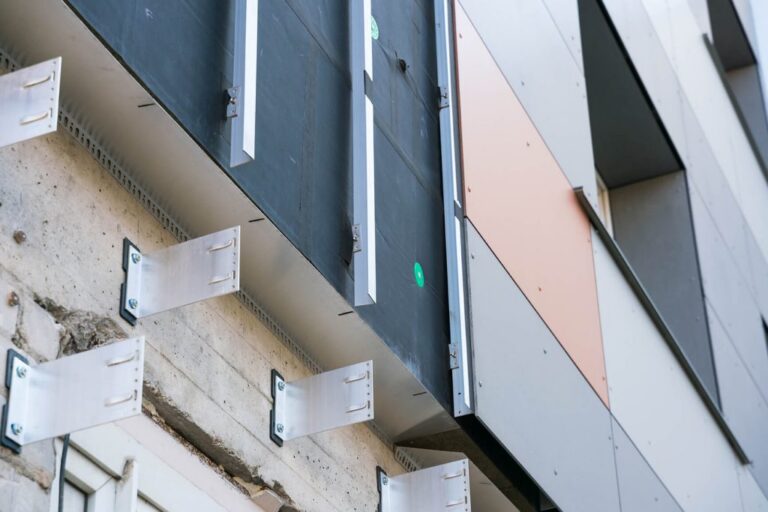
A concrete building in a coastal city is suffering from “spalling” (concrete rot) because moisture is reaching the rebar.
-
Decision: Install a metal rainscreen over new rigid insulation.
-
Challenge: The anchors for the new cladding must be thermally broken to prevent “cold spots” where interior condensation could form.
-
Failure Mode: If the new metal panels are not vented at the top and bottom, the humidity will be trapped against the concrete, accelerating the rot.
Scenario C: The Pacific Northwest Wood-Frame High-Rise
In a region where it rains 150 days a year, wood-frame structures are at high risk of interstitial mold.
-
Strategy: Utilize a “smart” vapor retarder that allows the wall to dry toward the interior during the summer and blocks vapor drive toward the exterior in the winter.
-
Second-Order Effect: Improved indoor air quality by preventing the “damp smell” associated with hidden wall moisture.
Planning, Cost, and Resource Dynamics
The economics of how to manage facade moisture are often viewed through the lens of insurance. The cost of the “drainage layer” is a small fraction of the total facade cost, but its absence can lead to a 100% loss of the asset.
| Component | Cost Range (USD/sq ft) | Lifecycle Value |
| Liquid-Applied WRB | $3 – $8 | Highly durable air/water seal |
| Drainage Mat/Gap | $1 – $4 | Mechanical path for water exit |
| Stainless Steel Flashing | $15 – $30 (linear) | Lifetime protection at joints |
| Vapor Permeable Insulation | $4 – $12 | Allows the assembly to breathe |
The Opportunity Cost of “Face-Sealing”
Choosing a cheap barrier system over a managed rainscreen might save $10 per square foot in Year 1. However, by Year 15, the cost of replacing failed sealants and repairing damaged sheathing typically exceeds $50 per square foot.
Tools, Strategies, and Support Systems
-
Blower Door Testing: Essential for finding air leaks that carry moisture.
-
ASTM E1105 Water Testing: A field test where a “rain rack” sprays the facade while a vacuum pulls air from the inside to find leaks.
-
WUFI Modeling: Sophisticated software that predicts moisture accumulation over 10 years of weather cycles.
-
Capillary Breaks: Simple structural details, like a small notch in a window sill, that stop water from “climbing” upward.
-
Thermal Imaging: Finding the temperature differentials that indicate hidden moisture or wet insulation.
-
Substrate Moisture Meters: Using “pins” or sensors to track the moisture content of wood or concrete behind the cladding.
Risk Landscape and Failure Modes
The most dangerous moisture is the moisture you cannot see.
-
Compounding Risks: If a building has an air leak and a cold surface, moisture will condense. If that surface is wood or gypsum, mold will grow. The failure is a triad of air, temperature, and substrate.
-
The “Kick-Out” Flashing Failure: A $5 plastic part that is missing at the end of a roof-to-wall intersection can dump 500 gallons of water a year directly into the wall cavity. This is a “point-source” failure that can rot a structural corner in under 24 months.
Governance, Maintenance, and Long-Term Adaptation
Moisture management is a process, not a product. It requires a “Governance Manual” for the building owner.
The Moisture Checklist
-
Annually: Clear all weep holes (the small openings at the bottom of walls). Insects and dust often clog these, turning a drainage cavity into a “bathtub.”
-
Bi-Annually: Inspect sealant joints at all window and door penetrations.
-
Trigger Events: After any major windstorm or seismic event, a visual inspection for “displacement” of cladding panels should be conducted to ensure the drainage plane hasn’t been pinched or torn.
Measurement, Tracking, and Evaluation
How do we prove the strategy is working?
-
Leading Indicators: Airtightness measurements and the results of “mock-up” testing in a laboratory.
-
Lagging Indicators: Total counts of occupant mold complaints and the cost of sealant repairs over a 10-year period.
-
Documentation: Maintain a “Flashing Map” that shows where every critical transition is located, making it easier for future maintenance teams to find hidden drains.
Common Misconceptions and Oversimplifications
-
“Vapor barriers are always good”: False. In many climates, a vapor barrier traps moisture inside the wall.
-
“Caulk is waterproofing”: Caulk is a temporary aesthetic bridge. The real waterproofing must be the flashing behind it.
-
“Brick is waterproof”: Brick is a “reservoir” material; it sucks up water and slowly pushes it into the wall via vapor pressure.
-
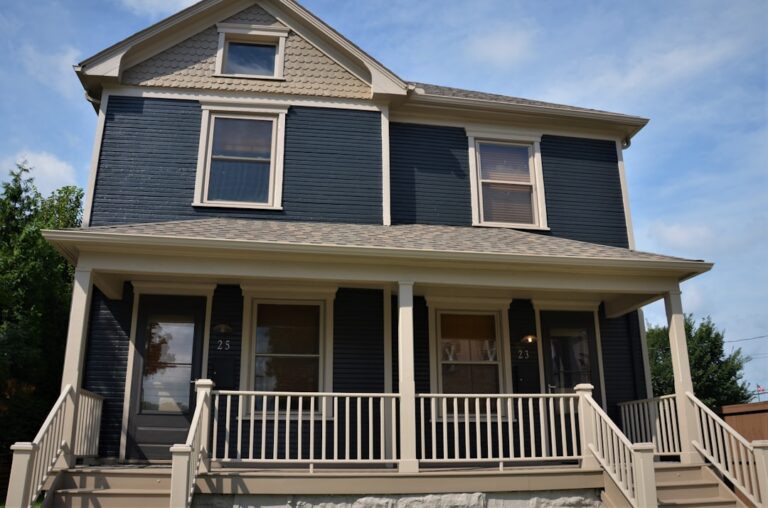
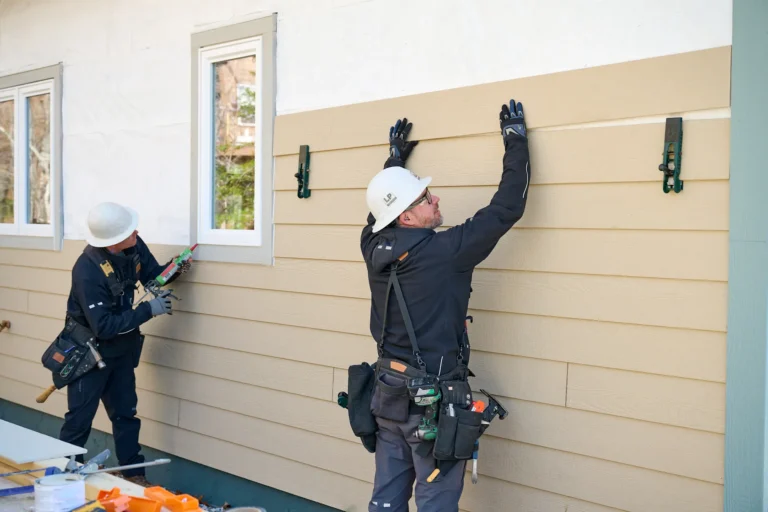
“Vinyl siding is a water barrier”: Vinyl siding is a “solar and wind shield.” Water goes behind it by design; the wall behind it must be waterproof.
-
“Airtight buildings cause mold”: Unventilated buildings cause mold. Airtight buildings with mechanical ventilation are the driest and healthiest structures in existence.
Synthesis and Strategic Judgment
The objective of how to manage facade moisture is to create a building that can survive a “bad year”—a year of record-breaking rain or a failure of a primary sealant. A resilient facade is one that accepts the fallibility of its components and provides a safe, mechanical path for moisture to exit. In an era of climate change, the ability of a building to dry out after a storm is no longer a “best practice”—it is a fundamental requirement for the preservation of capital and the protection of human health.